This post contains affiliate links. If you book a rental car or tour through one of them, we may earn a small commission at no extra cost to you. We only recommend things we’d genuinely suggest to a friend.
Most guides to Kyushu treat Beppu and Aso as two separate stops you connect by the fastest road available. That’s a shame, because the road between them — the Yamanami Highway — is one of the best drives in Japan, and it passes within a few minutes of a coin-operated family bath that almost no English-language site has ever written about.
This guide covers both halves of that trip: the practical logistics of getting from Beppu to Aso, and a genuine stop along the way that we visited ourselves.
Two Ways to Get from Beppu to Aso
There are two ways to drive from Beppu to Aso. The fast way sticks to the Oita Expressway and the main Kyushu Yokudan Road, cutting straight through. The slow way follows the Yamanami Highway — a 52-kilometer stretch of the same corridor running from Mizuwake Pass, near Yufuin, to Ichinomiya in Aso City — and climbs through the Kuju highlands instead of skirting them.
The slow way takes longer. It’s also the only one that passes anywhere near the coin-operated onsen below, or the 1,330-meter Makinoto Pass, where the road tops out with views of both the Kuju mountain range behind you and Aso’s volcanic peaks ahead. If you’re only passing through once, the detour is worth the extra time.
Planning the wider trip? See our guides to how many days you need in Kyushu and which of our spots you can, and cannot, see without a rental car.
Why You’ll Need a Rental Car for This Route
Public transport along this route is thin — one round trip a day on the Beppu–Kumamoto bus line, and it doesn’t go near the sights in this guide. A rental car is the only practical way to do the Yamanami Highway properly.
Oita Airport has eight rental counters, all in the arrival lobby: Toyota, Nippon, Times, Nissan, Budget, Orix, and two local operators, Kunisaki and Lion. For comparing prices across several of these at once, DiscoverCars aggregates most of the major chains and is usually easier than booking directly through a Japanese-language site.
One thing that trips up a lot of visitors: Japan only accepts International Driving Permits issued under the 1949 Geneva Convention. If your IDP was issued under the 1968 Vienna Convention instead — which is common for a lot of European travelers — it will be rejected at the counter, no exceptions. If you’re a licensed driver from France, Germany, Switzerland, Belgium, Monaco, Estonia, or Taiwan, you don’t need an IDP at all — but you do need an official Japanese translation of your home license, issued by JAF (Japan Automobile Federation) or your embassy. A translation you arrange yourself won’t be accepted.
Check this before you fly, not when you’re standing at the rental counter.
A Hidden Family Onsen in the Kuju Highlands
Most guides to this stretch of Oita send you straight past Kuju, but the mountain town hides something you won’t find at a hotel spa: a walk-in, coin-operated private bath that almost no English-language guide mentions.
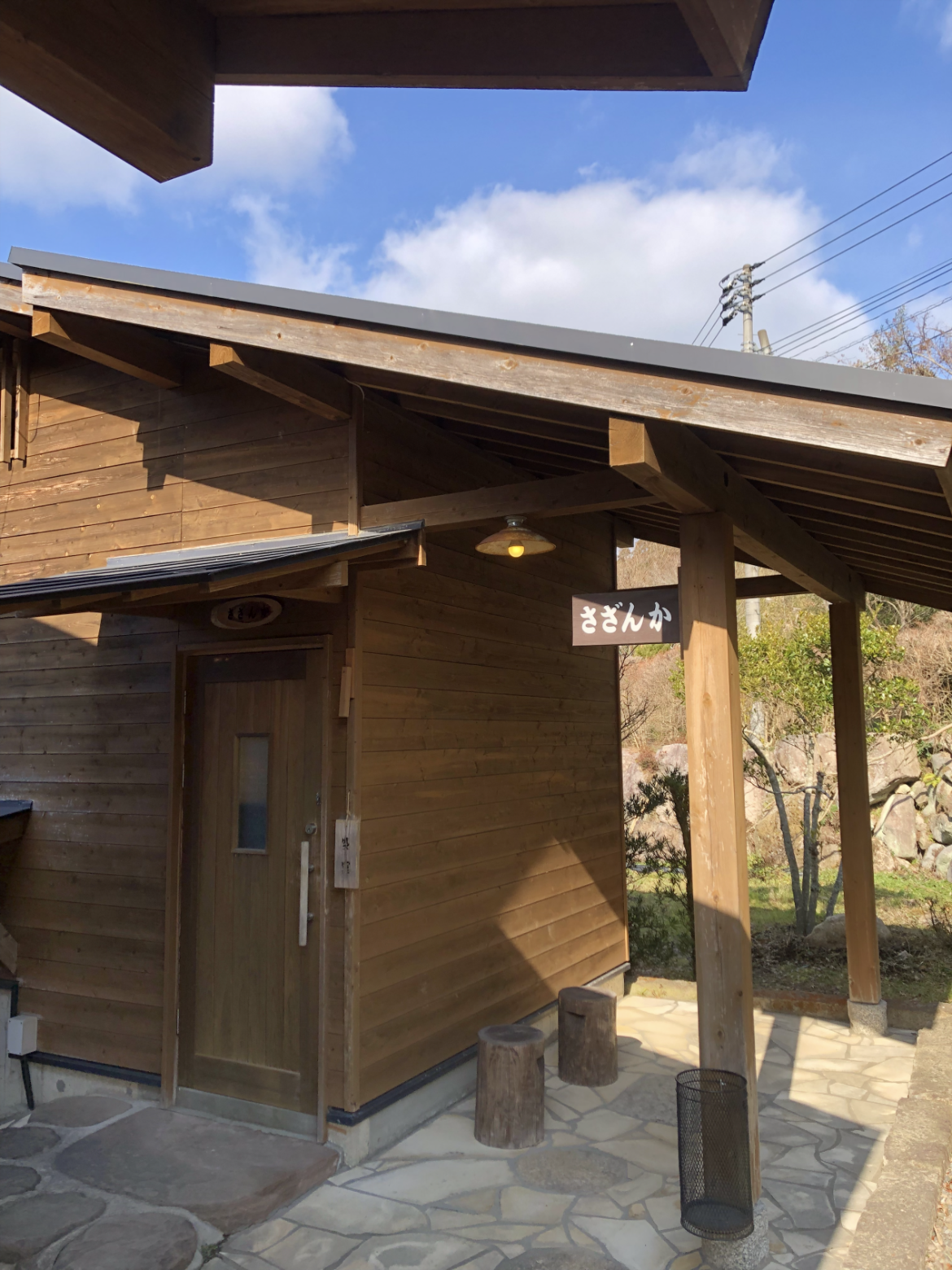
Satoyama Onsen Shikisai-no-Yu (里山温泉 四季彩の湯) sits in the hills of Kokonoe, between Yufuin and the Kuju highlands. It’s a family bath (kazoku-buro) in the traditional sense — small, unpretentious, and built for locals rather than tourists. There’s no reservation system. You simply show up and take whichever room is free; each one is named after a flower (ours, on a quiet December afternoon, was called Sazanka, “camellia”).
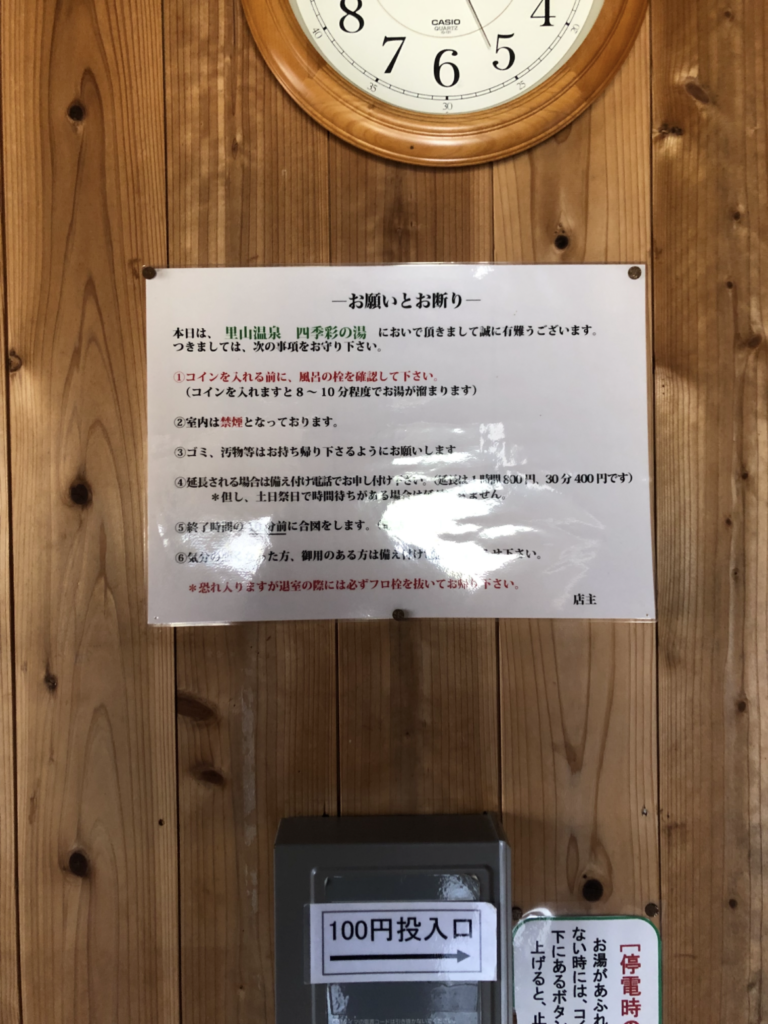
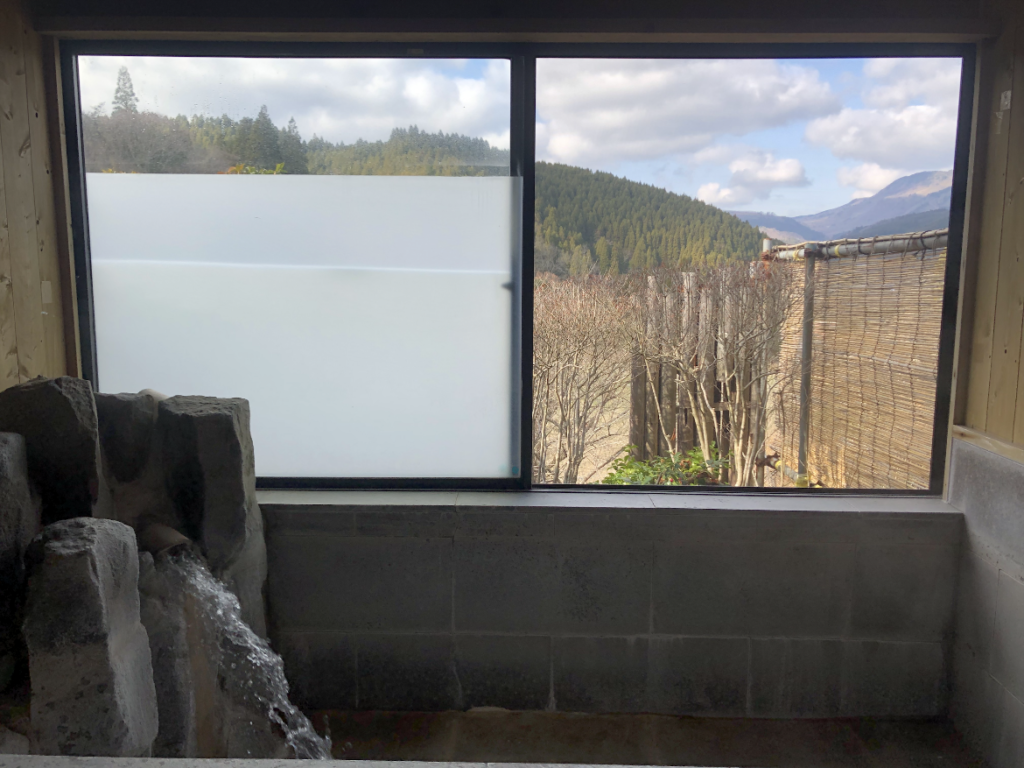
Here’s what no website tells you: after you pay, your tub isn’t already full. Each room has its own coin slot. You check that the drain plug is in place, then feed it a 100-yen coin, and hot water fills the tub on its own over the next 8 to 10 minutes. It’s a small ritual, but it’s the kind of detail that makes this feel like a genuinely local experience rather than a tourist product.
Every instruction in the room — no smoking, take your trash with you, call the front desk on the in-room phone if you want to extend your time, pull the plug before you leave — is printed only in Japanese, with no English version anywhere. There’s also no posted policy on tattoos or swimwear, which is itself a sign of how far this place sits from the international tourist trail. We’ve translated the key rules above so you don’t need to work any of it out on the spot.
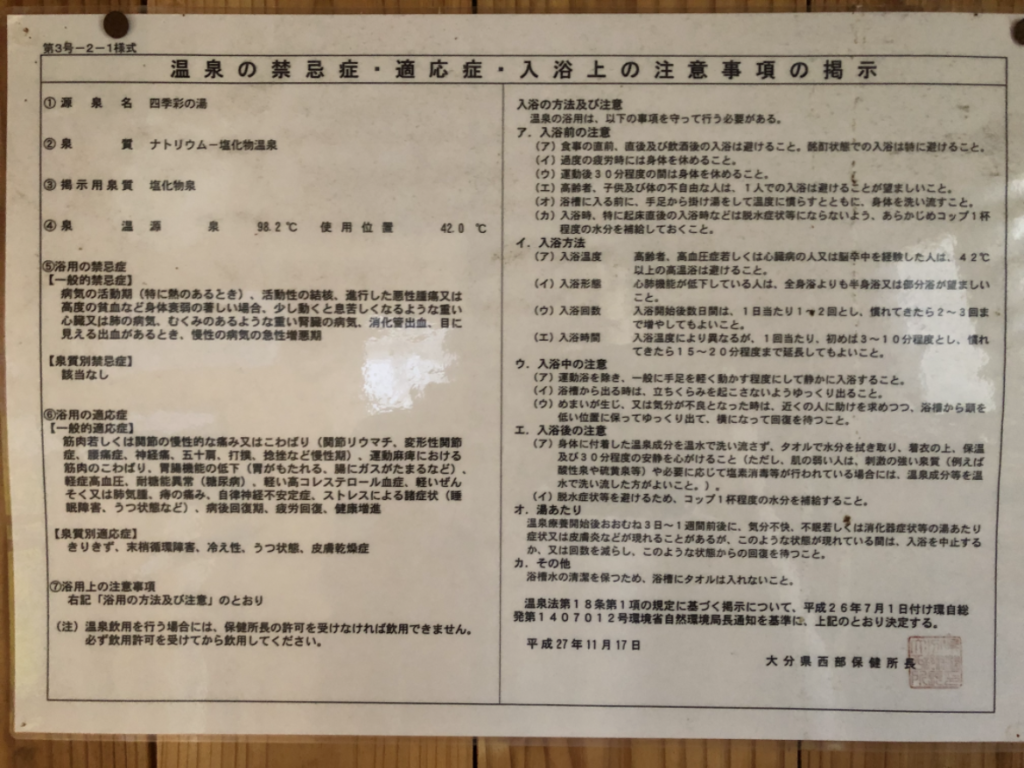
The water is a sodium chloride spring, drawn from a source at 98.2°C and diluted to a bathing temperature of 42°C — mineral, slightly cloudy, and a world away from the pale blue baths you’ll see in resort marketing photos. A notice from the local health department (required under Japan’s Hot Spring Act) lists who should avoid bathing here: anyone with an active infection, uncontrolled heart or kidney disease, or open wounds, among other conditions.
Cost: ¥1,500 for the base session, plus ¥700 for 30 extra minutes or ¥1,300 for a full extra hour (current rates as of January 2026; extensions aren’t available on weekends or holidays when other guests are waiting).
Hours: 12:00–21:00 on weekdays (last entry 20:00), 10:00–22:00 on weekends and holidays.
Booking: None. First-come, first-served.
Address: 2174-1 Hirabaru, Machida, Kokonoe-machi, Kusu-gun, Oita 879-4723.
Continuing to Aso
From the onsen, the Yamanami Highway continues south and west through the rest of the Kuju highlands before dropping into Ichinomiya, on the northern edge of Aso City — the official end of the highway. Plan on roughly 45–55 km and 70–90 minutes of driving for this stretch, depending on your exact route through Kuju — check live directions before you go, since the mountain roads wind enough that a straight-line distance won’t tell you much.
From Ichinomiya, Aso’s main sights — the caldera, the shrine, and the grasslands around Kusasenri — are a short drive further in.
Practical Tips for the Yamanami Highway Route
- Winter driving: The stretch around Makinoto Pass (1,330 m) is one of the highest road sections in Kyushu, and the area is known for frost and rime ice (juhyo) on roadside trees. The road doesn’t have a fixed seasonal closure, but Oita Prefecture’s own guidance assumes vehicles are carrying anti-slip equipment, and local drivers treat studless winter tires as essentially mandatory from December through March — conditions can flip from dry to icy within the same day at this elevation, even as late as March. If you’re renting a car for a winter visit, ask specifically for winter tires when you book.
- Fuel up before you go: Gas stations and convenience stores thin out once you’re in the highlands. Fill up in Yufuin or before you leave Beppu.
- Mobile signal: Coverage can be patchy in the mountain sections. If you’re relying on a Japanese SIM or eSIM for navigation, download offline maps as a backup.
- Temperature swings: Even outside winter, the highlands run noticeably cooler than Beppu at sea level. Bring a layer.
FAQ
Can I do this route without a car?
Technically, yes — the Kyushu Odan Bus (九州横断バス) runs between Beppu and Kumamoto via Yufuin and Kurokawa Onsen. But it’s limited to about one round trip a day on the Beppu line, and it doesn’t stop anywhere near the coin-operated onsen in this guide. If your goal is just to get from Beppu to Aso, the bus works. If you want to see any of the highlands along the way, you’ll need a car.
Do I need to book the onsen stop in advance?
No — and you can’t. Satoyama Onsen Shikisai-no-Yu doesn’t take reservations. You show up, and if a room is free, it’s yours.
Is this route open in winter?
Yes — the road doesn’t have a fixed seasonal closure, unlike some mountain passes elsewhere in Japan. But the highest section, around Makinoto Pass, gets frost and icing regularly between December and March, and conditions can flip from dry to icy within the same day. Studless winter tires are essentially mandatory if you’re driving this stretch in winter; ask for them specifically when you book your rental.
Source: 九州横断バス — Wikipedia
Leave a Reply