“When’s the best time to visit Kyushu?” depends a lot on what you’re willing to trade off — crowds, heat, rain, or cold — because there’s no single perfect month. What follows is a season-by-season honest breakdown, weighted toward the Oita/Miyazaki side of the island where most of the spots on this site sit.
This post contains affiliate links. If you book a rental car or tour through one of them, we may earn a small commission at no extra cost to you. We only recommend things we’d actually use ourselves.
Spring (March–May): cherry blossoms, comfortable weather, and Golden Week crowds
Cherry blossoms peak across Oita in late March through early April — Oka Castle’s sakura festival in Taketa is one of the better-known spots. Temperatures are mild and comfortable, which makes spring one of the two genuinely easy seasons to travel in. The catch is Golden Week (late April into early May), when domestic tourism spikes hard and rental cars, ryokan, and popular restaurants book up well in advance. If your dates are flexible, aim for late March/early April or the back half of May instead of the Golden Week window itself.
Rainy season (late May–mid July): earlier and shorter than you’d think
Kyushu’s rainy season (tsuyu) starts noticeably earlier than the rest of Japan — southern Kyushu typically runs from late May to mid-July, about ten days ahead of Tokyo. It’s not a washout the entire time; expect a mix of humid, overcast days and sudden downpours rather than constant rain. Honestly, this is an underrated window if you don’t mind carrying an umbrella: fewer tourists, green mountains, and waterfalls (we’ve got a few on this site) running at their fullest.
Summer and typhoon season (July–September): heat, humidity, and a real weather risk
July and August bring heat that regularly clears 37°C (98°F) with heavy humidity, plus Kyushu’s typhoon season, which runs roughly May through October but peaks from late July through late September — mid-September is often cited as the classic landfall window for the island. Southern Kyushu (Kagoshima, Miyazaki) sees more direct hits than the Fukuoka side. If you’re traveling in this window, build in one or two buffer days, keep an eye on the Japan Meteorological Agency’s forecasts, and know that JR Kyushu typically waives change/refund fees when a storm forces a schedule change. It’s not a reason to avoid Kyushu entirely, but it’s the one season where we’d actually suggest flexible dates over a fixed itinerary.
Autumn (late September–November): the best all-around season
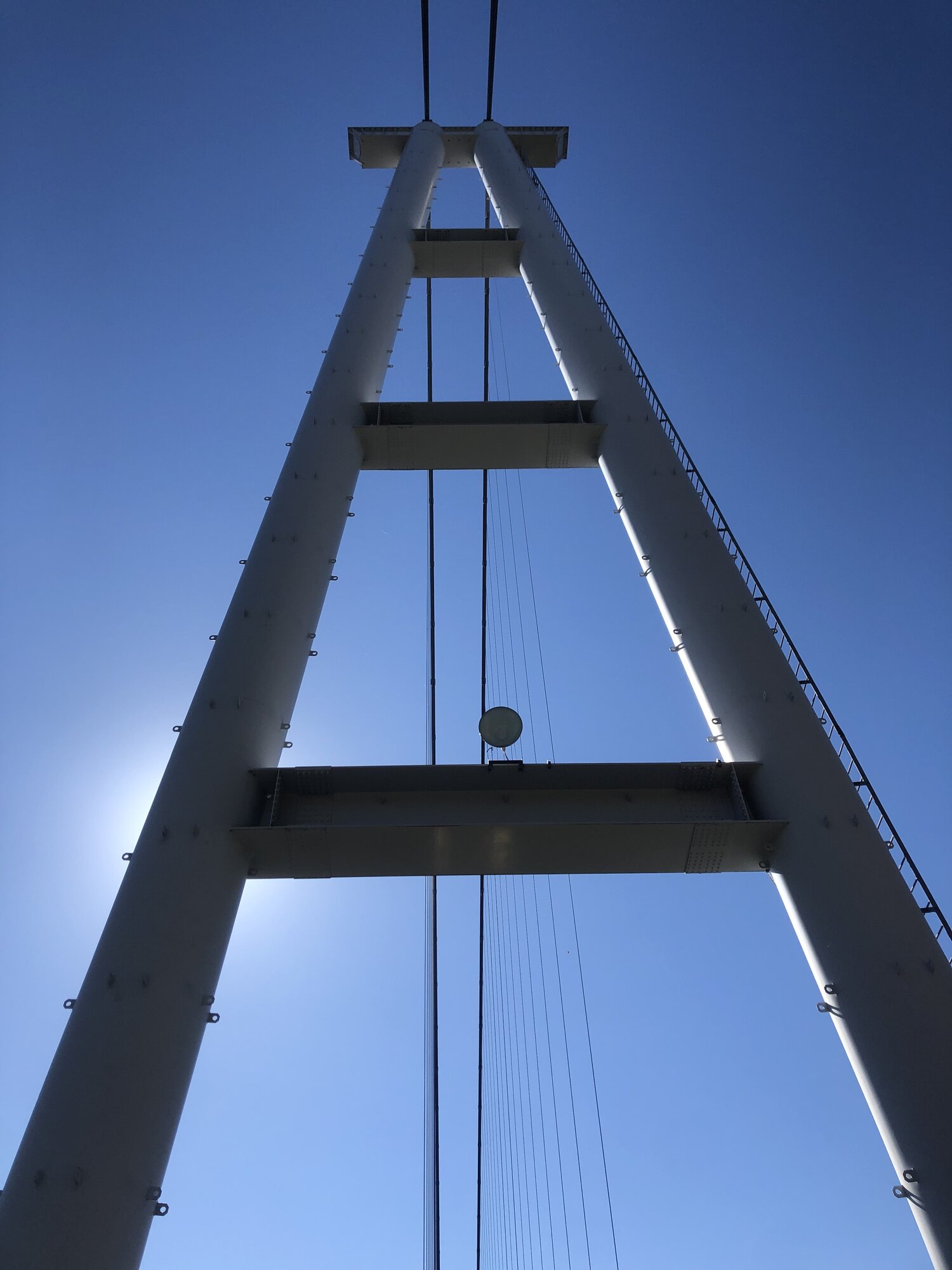
If we had to pick one season, this is it. Typhoon risk tapers off through October, temperatures settle into a comfortable range, and the autumn colors in Oita’s mountains — Kuju, Yufuin, Lake Kinrin — peak around late November. Kokonoe Yume Otsurihashi, Japan’s highest pedestrian suspension bridge, is a genuinely spectacular place to see it from, and it’s normally quiet outside of a couple of peak weekends.
Read the Kokonoe Yume Otsurihashi guide →
Winter (December–February): cold, dry, and made for onsen
Winter is Oita’s coldest and driest stretch, and honestly one of the more underrated times to visit if onsen bathing is a priority — there’s something about a hot spring in cold air that just works. On clear, cold mornings, Mount Tsurumi above Beppu occasionally gets rime ice on its summit trees, a genuine cold-weather bonus if the timing lines up. Tourist numbers drop noticeably outside of New Year’s, so it’s also the quietest season to have popular spots mostly to yourself.
Read the Mount Tsurumi guide →
So when should you actually go?
For most first-time visitors, late September through November is the safest bet — comfortable weather, low typhoon risk, and the best scenery of the year. Late March into April is a close second if you want cherry blossoms and can dodge Golden Week. If you’re locked into a summer trip, it’s still worth doing — just build slack into the schedule and keep tabs on the forecast. Once you’ve settled on a season, our itinerary length guide and Fukuoka vs. Oita basing guide are the natural next steps for planning the trip itself.
Leave a Reply