This post contains affiliate links. If you book a rental car or tour through one of them, we may earn a small commission at no extra cost to you.
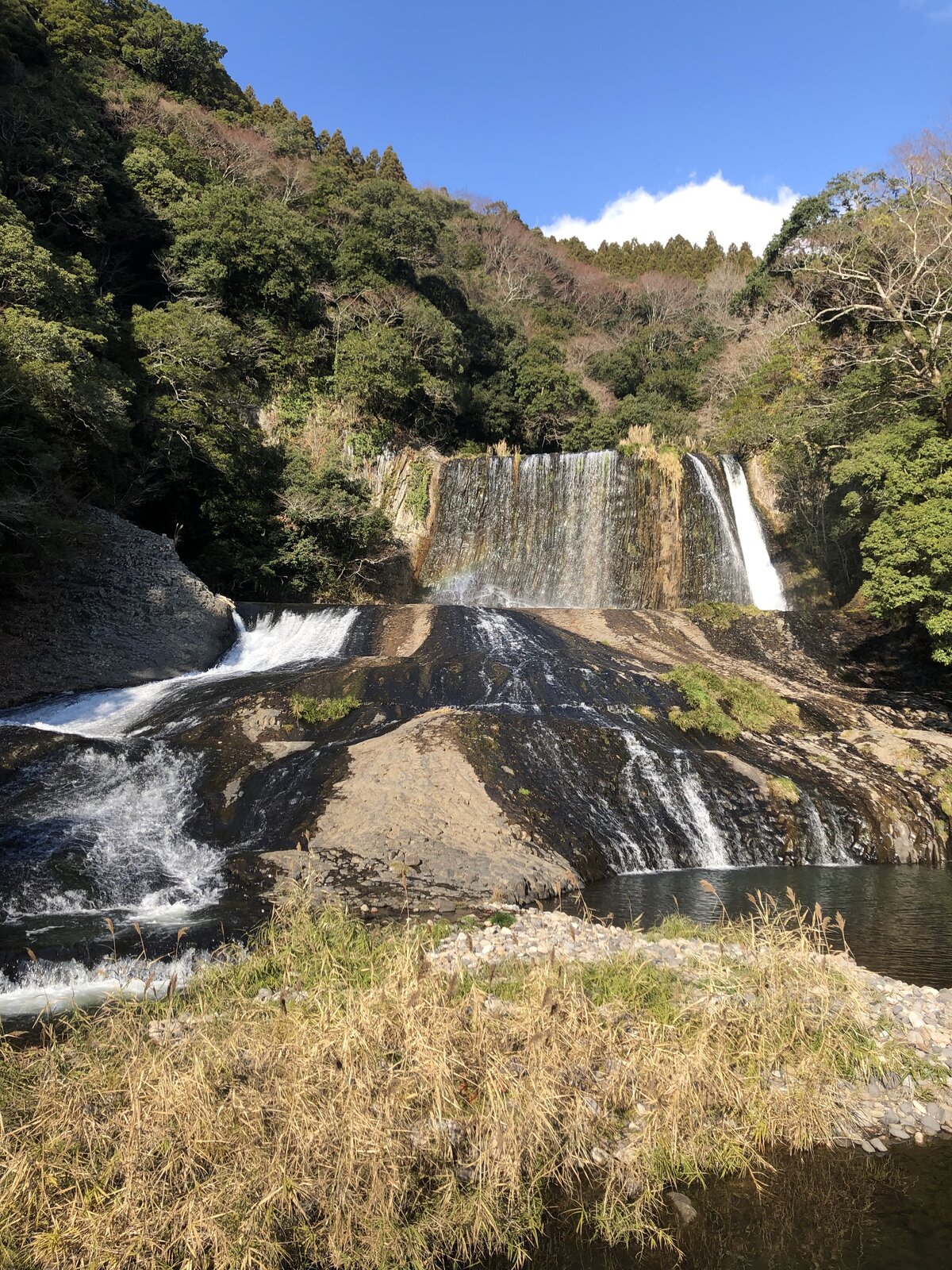
Drive far enough into the Kuju highlands and you’ll find a wide, curtain-like waterfall dropping over a flat rock wall into a river pool below — Ryumon Falls (龍門の滝), tucked into Kokonoe-machi in Kuju’s back country. It’s known locally for two things: a Kamakura-era legend that gave it its name, and a wide, cracked-rock slope that generations of local kids used as a natural water slide. One of those things you can still experience. The other, as of our research, you currently can’t.
A Dragon’s Gate in the Kuju Highlands
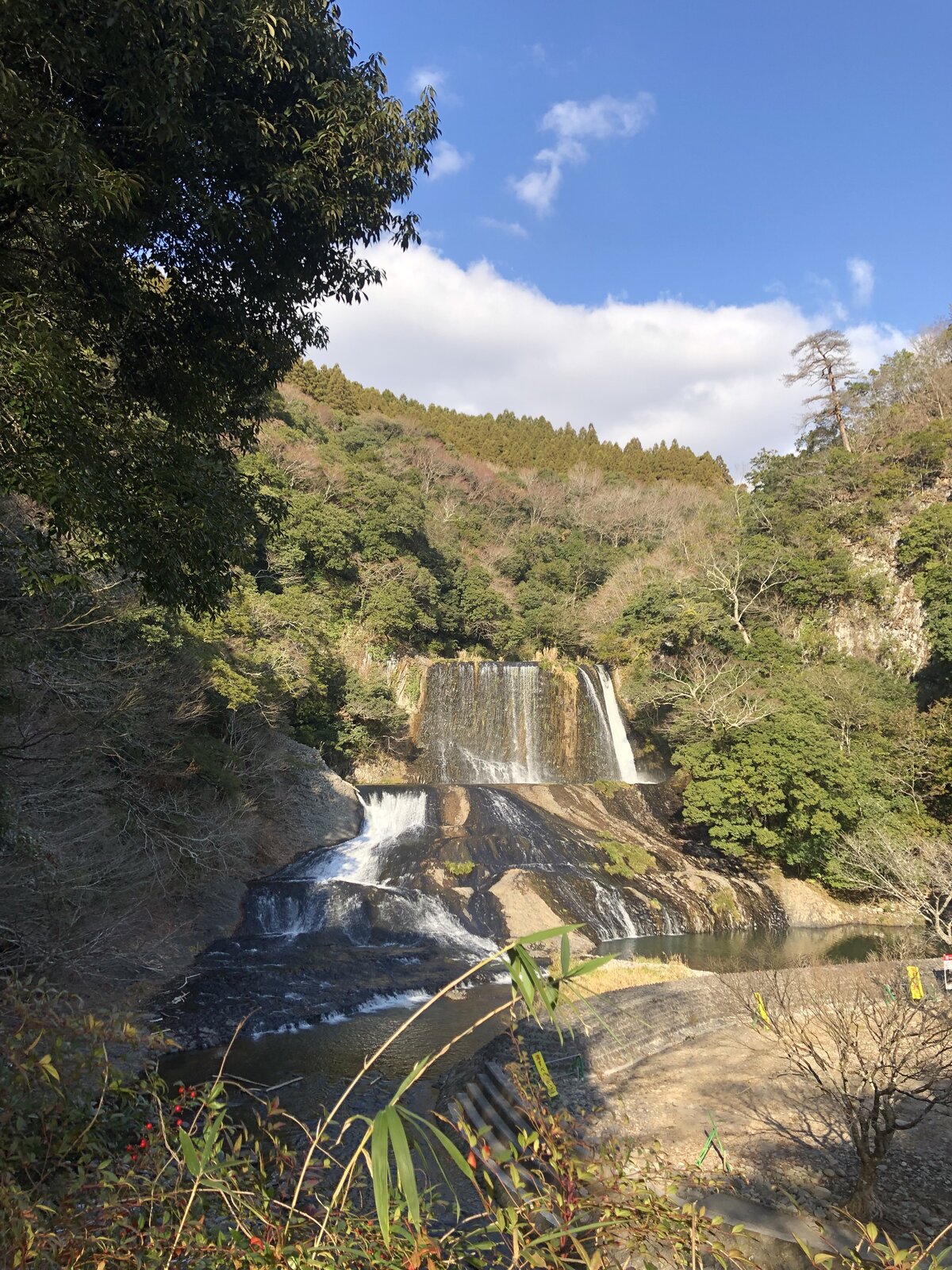
Ryumon Falls drops in two tiers over a wide rock face on the Matsugi River (松木川), part of the Chikugo River system — sources put the drop at somewhere between 20 and 26 meters, spread across a wall roughly 40 meters wide, with a pool partway down that splits the fall into an upper and lower stage. The name means “Dragon’s Gate,” and the story behind it, as told on Oita’s official tourism site, traces back to the Kamakura-era Zen priest Rankei Dōryū, who is said to have likened the falls to the legendary Dragon Gate on China’s upper Yellow River — the mythical rapids where a carp strong enough to leap them was transformed into a dragon. It’s a single-sourced attribution rather than something we could triple-check, but it’s a fitting name for a waterfall this wide and this dramatic.
A Natural Water Slide — Currently Off-Limits
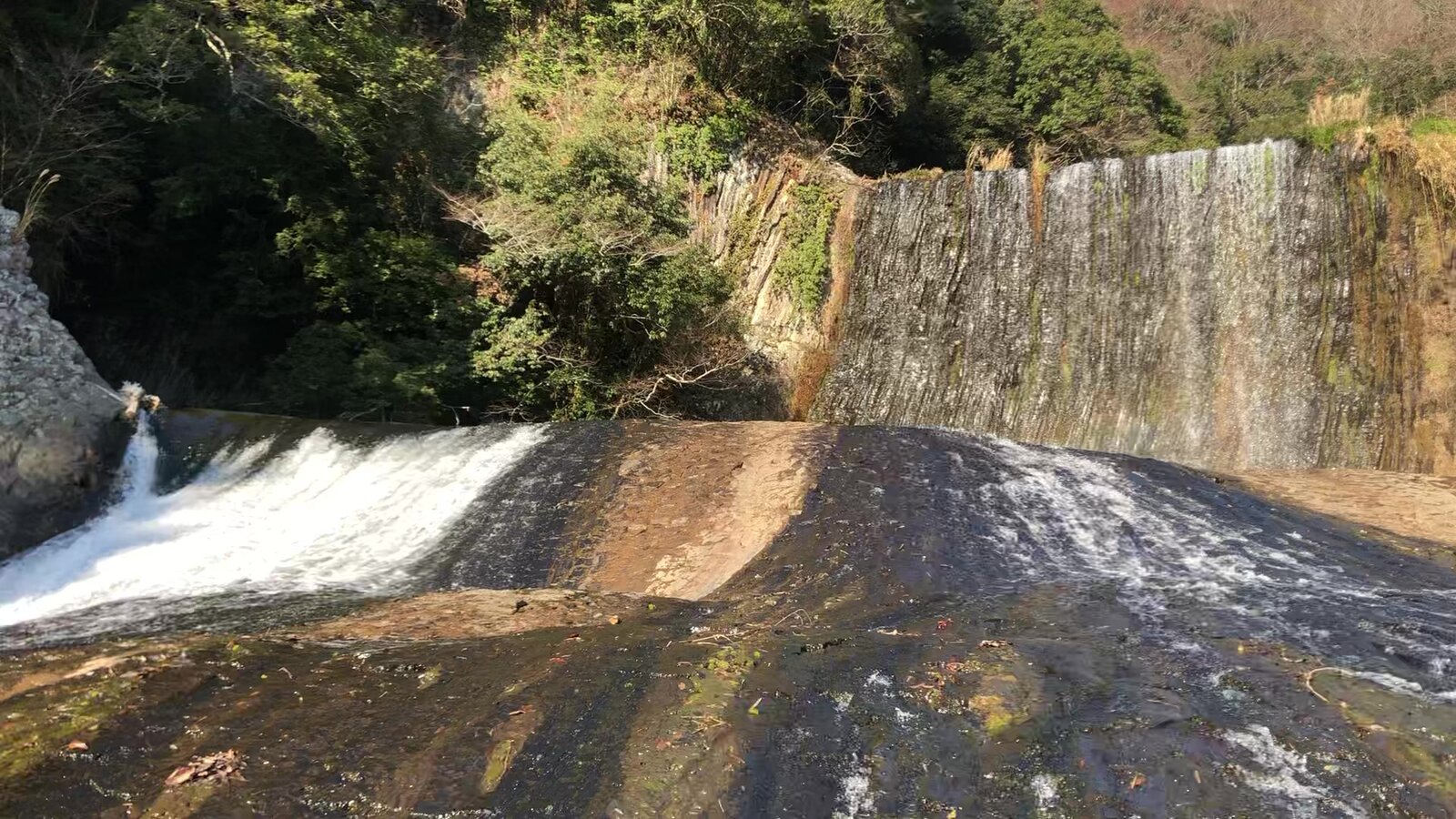
What made Ryumon Falls a genuine local institution wasn’t just the view — it was the wide, gently sloped rock slab beside the main drop, worn smooth enough over the years that generations of local kids used it as a natural water slide, sitting on a mat or float and sliding down into the pool below. It’s a real, well-documented summer tradition, not a rumor. But as of our research, swimming and sliding in the main pool have been officially suspended following a heavy-rain rockfall in 2020 that left the cliff beside the falls unstable. Downstream water play reportedly remains fine, but the falls’ main pool itself is a look-don’t-touch spot for now — worth confirming with Kokonoe Town’s tourism division before you go if this is a big part of your reason for visiting.

Up close, the rock slab makes the case for itself even without the water slide: it’s cracked into a tight, tile-like pattern by years of erosion, giving the whole surface a distinctive jointed texture that’s as interesting to look at as the waterfall dropping over it.
The Walk Down to the Falls
Getting to the falls is easy: a paved path of roughly 200 meters — about a 3 to 5 minute walk — leads from the free parking lot down to the riverside, with a stone stairway handling the last stretch of elevation change. It’s a gentle, well-maintained walk suitable for most visitors, not a hike.

Visiting Ryumon Falls
Cost: Free
Hours: Open-air site, no gate — accessible during daylight
Parking: Free lot at the falls, about a 200m walk to the falls
Access: About 15 minutes by car from Kokonoe IC on the Oita Expressway
Caution: Swimming and sliding in the main pool are officially suspended following a 2020 rockfall — check current conditions before planning a visit around this
Getting There
Ryumon Falls sits in Kokonoe-machi’s back country, the same general area as Kokonoe Yume Otsurihashi, Japan’s highest pedestrian suspension bridge — the two make a natural same-day pairing if you’re already exploring this part of the Kuju highlands. There’s no public transit option that reaches the falls directly, so a rental car is essential; see our guide to the Yamanami Highway and why you need a car for IDP and rental car basics.
Sources
Visit Oita official tourism site · Kokonoe Town tourism information · Japanese Wikipedia (龍門の滝 (九重町)) · Regional travel/enthusiast reporting on the 2020 rockfall closure
Leave a Reply