This post contains affiliate links. If you book a rental car or tour through one of them, we may earn a small commission at no extra cost to you. We only recommend things we’d genuinely suggest to a friend.
The Waterfall Almost No One Stops For
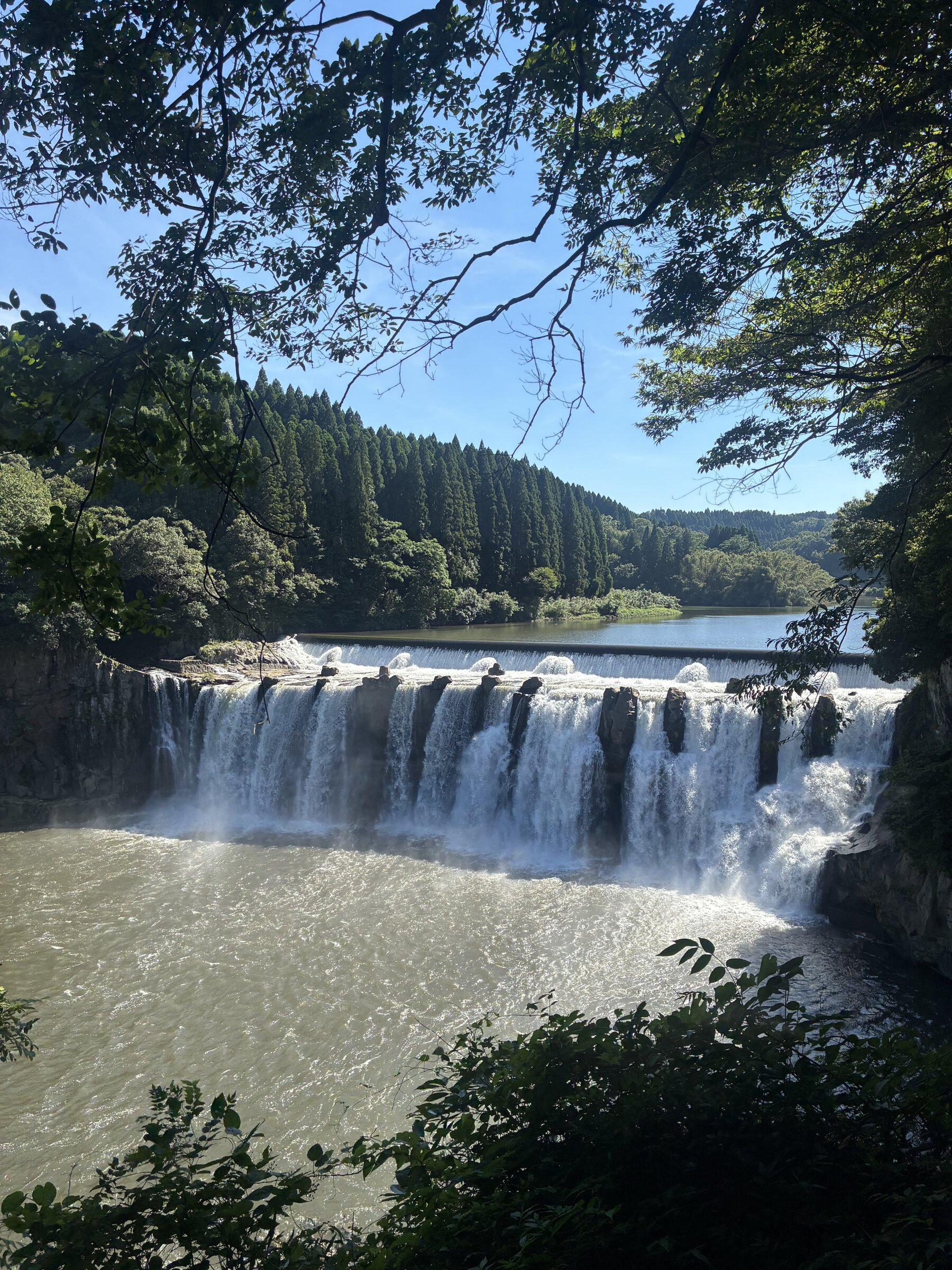
Oita likes to claim it has two Niagaras. Harajiri Falls, wide and thunderous, gets the postcards. Chinda Falls, a short drive away on the same river system, gets almost nothing — a couple of local tour buses, a handful of photographers who know the light, and on a weekday afternoon in July, us and no one else.
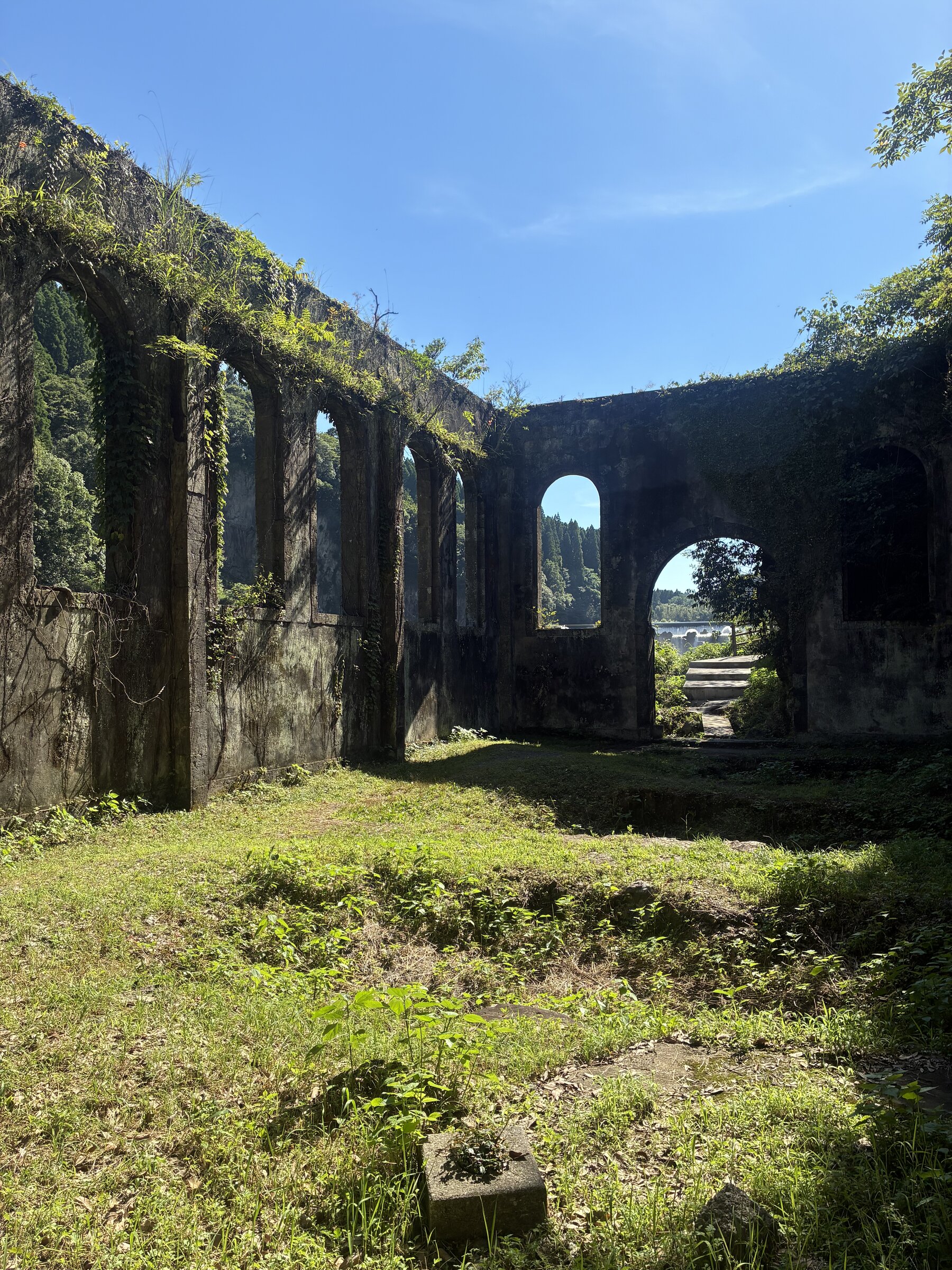
That’s the whole appeal. You get the same curtain of water dropping across a rock shelf nearly as wide as a football field, plus something Harajiri doesn’t have: the shell of a hydroelectric power station, abandoned mid-river for over a century, that you can walk straight into.

Getting There and What to Expect
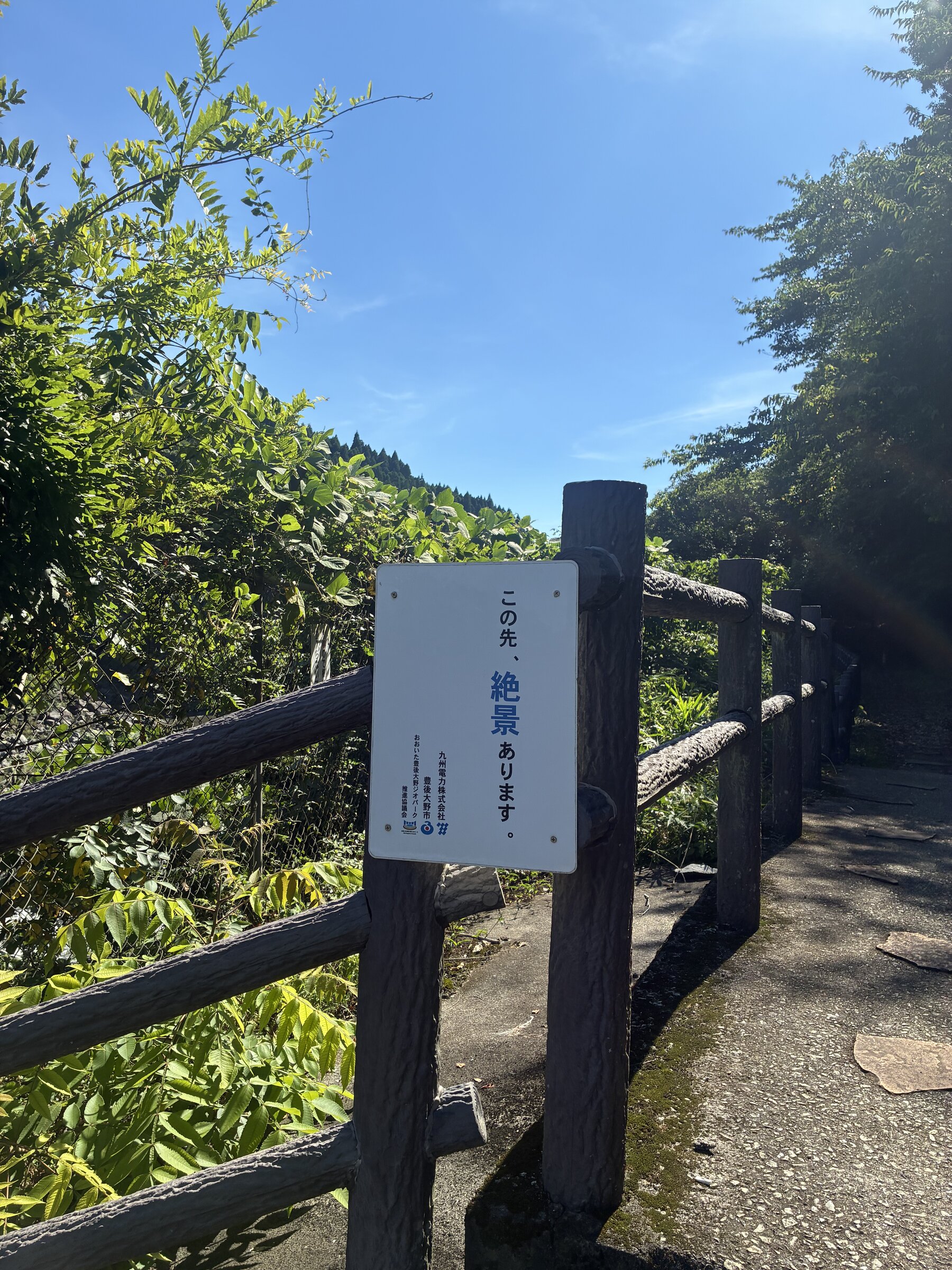
The falls sit right off a local road in Bungo-Ono, about ten minutes by car from Bungo-Kiyokawa Station or from the Oono interchange on the Naka-Kyushu Cross-Country Road. There’s a free 10-car lot at Chinda Falls Park, open around the clock — on our visit, on a weekday afternoon, we had it almost entirely to ourselves.
There’s no admission fee and no set visiting hours; it’s an open park and viewing area. The path down to the observation deck has handrails and solid footing the whole way — nothing that requires hiking shoes. Budget around 30 minutes: enough time to take in the falls from the deck, then walk down to the power plant ruins and back.
Cost: Free.
Hours: No fixed hours — it’s an open-access park, though the power plant ruins are easier (and safer) to explore in daylight.
Parking: Free, 10 spaces, at Chinda Falls Park, open 24 hours.
Two Waterfalls, One Ghost Power Station
What you’re looking at is technically two falls: a wide “male” falls about 20 meters high and 100 meters across, and a narrower “female” falls just downstream. Together they’ve been famous longer than almost anything else in the prefecture — the 15th-century ink painter Sesshu stopped here in 1476 and painted them, and while his original was lost in the 1923 Great Kanto Earthquake, copies by the Kano school still survive.
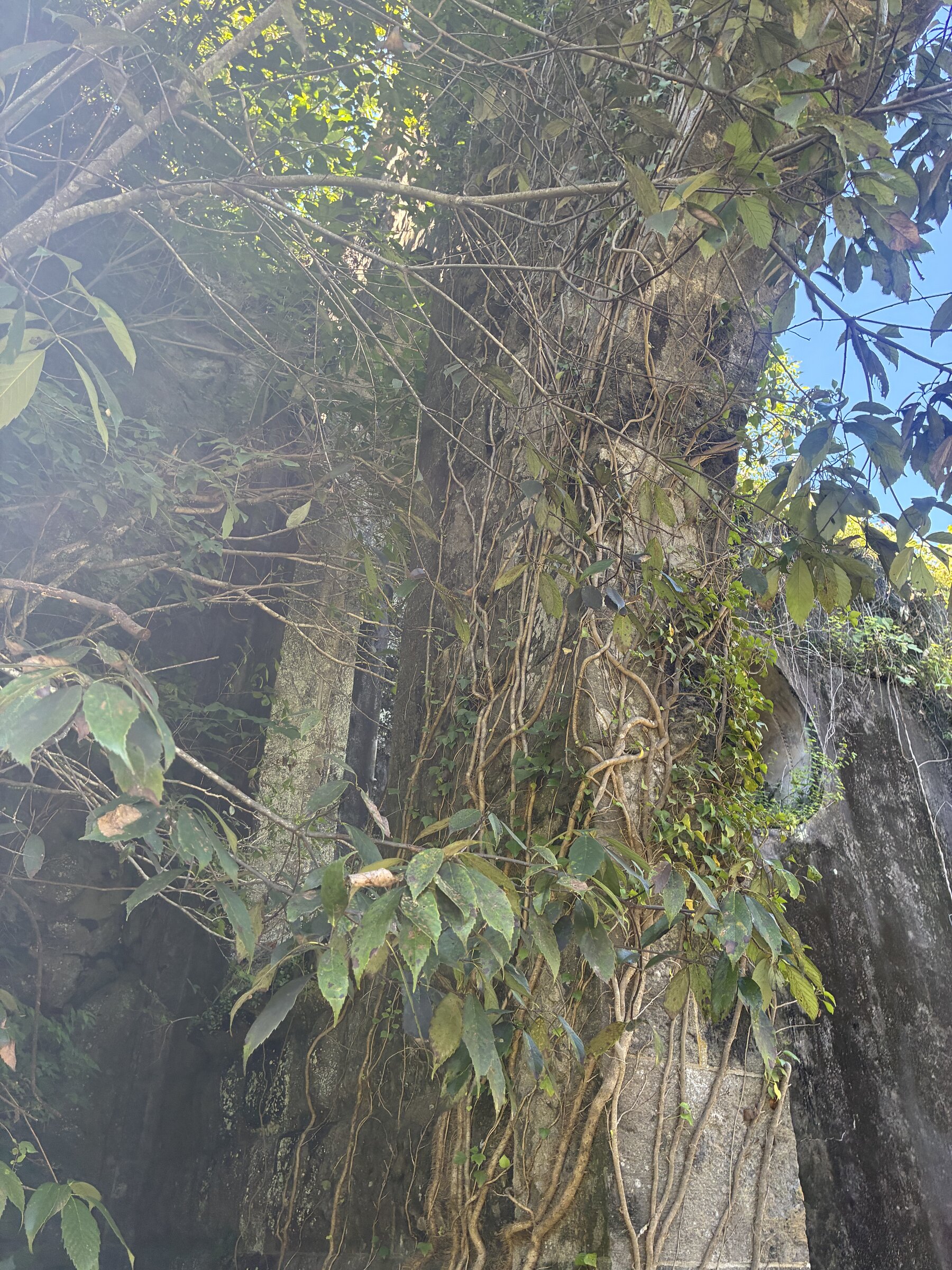
The stranger layer is what sits between the two falls: the roofless stone shell of a power station built in 1909 to run the streetcars between Oita and Beppu. Stairs lead down from the park to what’s left of it — outer walls, the outline of the turbine hall, ivy doing most of the decorating now. In the 1920s a dam upstream briefly dried the falls out entirely; the water came back, the station never did.
FAQ
Do I need to pay or book in advance?
No — Chinda Falls Park is free, open access, with no reservation system.
Can I get here without a car?
It’s possible from Bungo-Kiyokawa Station, but there’s no direct bus and it’s a walk of several kilometers along a road without sidewalks in places. A rental car is the realistic option — see our Yamanami Highway guide for what you’ll need, including the international driving permit rules.
Is it worth combining with Harajiri Falls?
If you’re already in Bungo-Ono for Harajiri, Chinda is an easy add-on and gives you a very different kind of view — a wide, dammed-up curtain of water plus the power plant ruins, rather than Harajiri’s single dramatic drop. While you’re in the area, it’s also worth the short drive to Fukoji Magaibutsu, a huge cliff-carved Buddha that gets even fewer visitors than Chinda does.
How long should I plan for?
About 30 minutes covers the observation deck and a walk down to the ruins.
If you want to see a waterfall on a completely different scale, it’s worth the extra drive north to Higashi Shiiya Falls near Usa — an 85-meter drop known locally as “Kyushu Kegon” and ranked among Japan’s official top 100 waterfalls.
Leave a Reply