This post contains affiliate links. If you book a rental car or tour through one of them, we may earn a small commission at no extra cost to you.
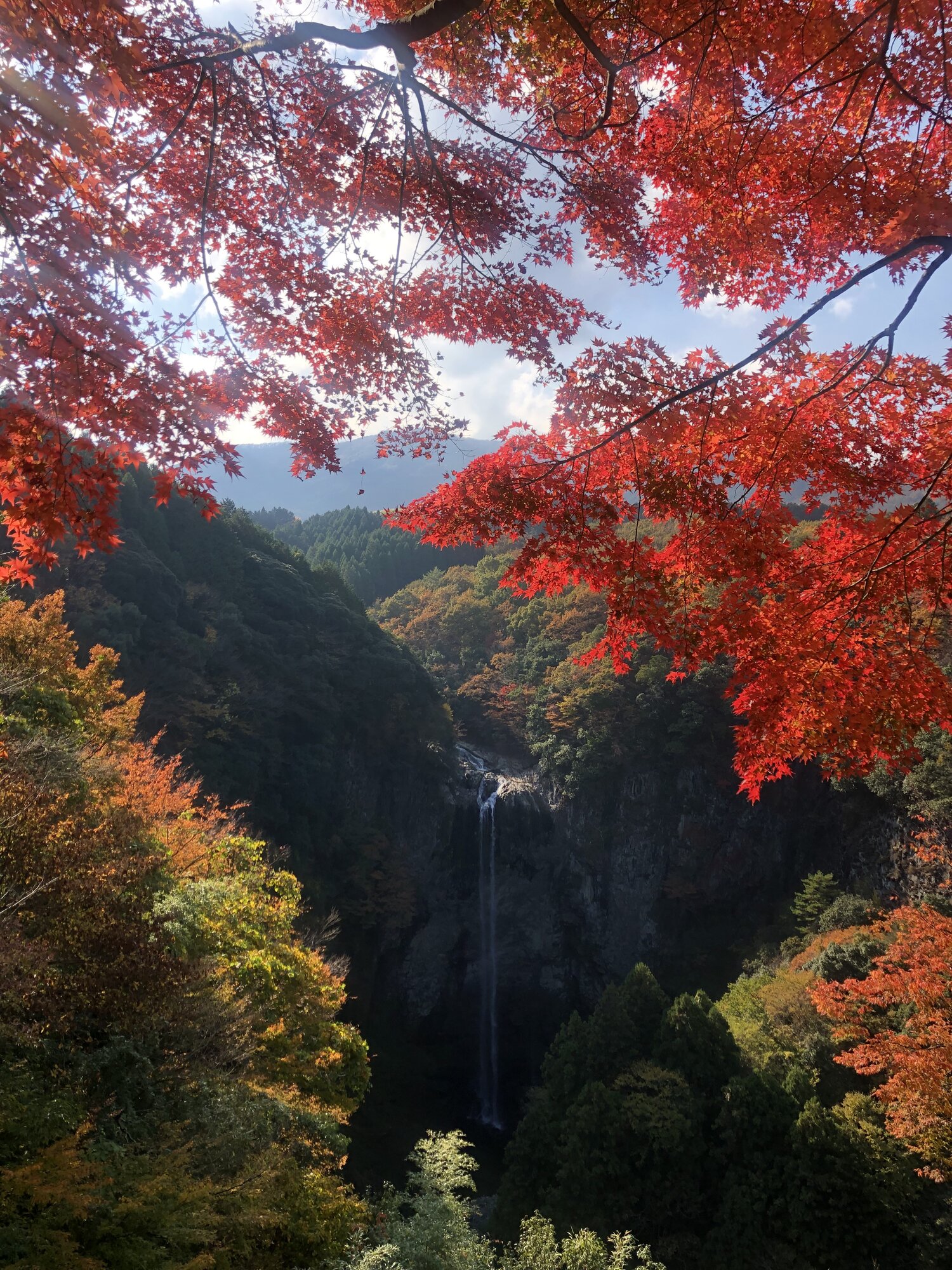
Tucked into the Yabakei uplands outside Usa, Fukino Falls (福貴野の滝) drops about 65 meters through a narrow cleft in the rock, splitting partway down into two separate channels that locals call 雄滝 (the “male” fall) and 雌滝 (the “female” fall). It’s counted as one of “Usa’s Three Falls” (宇佐の三瀑), alongside Higashi Shiiya Falls and the lesser-known Nishi Shiiya Falls. Higashi Shiiya made Japan’s official list of 100 Famous Waterfalls; Fukino didn’t. That’s not really a knock against it — it sits inside the same nationally designated Place of Scenic Beauty, has its own quiet historical footnote, and on the November afternoon we visited, we had the entire viewing deck to ourselves.
Two Viewpoints, Two Different Hikes
There are actually two separate ways to see Fukino Falls, and picking the right one changes the visit more than the names suggest.
The 展望台 (observation deck) is the easy route: a free parking area with room for roughly 20–30 cars and two buses, then a paved, roughly 300-meter, 10-minute walk with a few short flights of stairs. This is where most visitors go, and it’s the vantage point behind most of the photos here — an elevated view straight down the gorge to the falls.
The 滝つぼ (pool) route is the harder, quieter option. A smaller free lot (about 10 cars) sits off a narrow access road that loses its guardrails in places, and the walk in — roughly 15 minutes — has more stairs and a good chance of mud underfoot. It puts you much closer to where the water actually lands, but it’s not the one to pick if you’re short on time, unsteady on your feet, or in the wrong shoes.

A Waterfall With Some History
The falls carry an older name, too: 龍泉の滝 or 龍泉寺の滝, after 龍泉寺, a temple that once stood nearby and no longer exists — it survives now only as a place name on local maps. There’s also a second, closer vantage called 裏見の滝, where the path lets you look at the water from behind rather than straight on. None of this is dramatic history exactly, but it’s the kind of detail that tends to survive only on a local information board and in old prefectural records — there’s very little written about Fukino Falls in English anywhere else.
When to Go
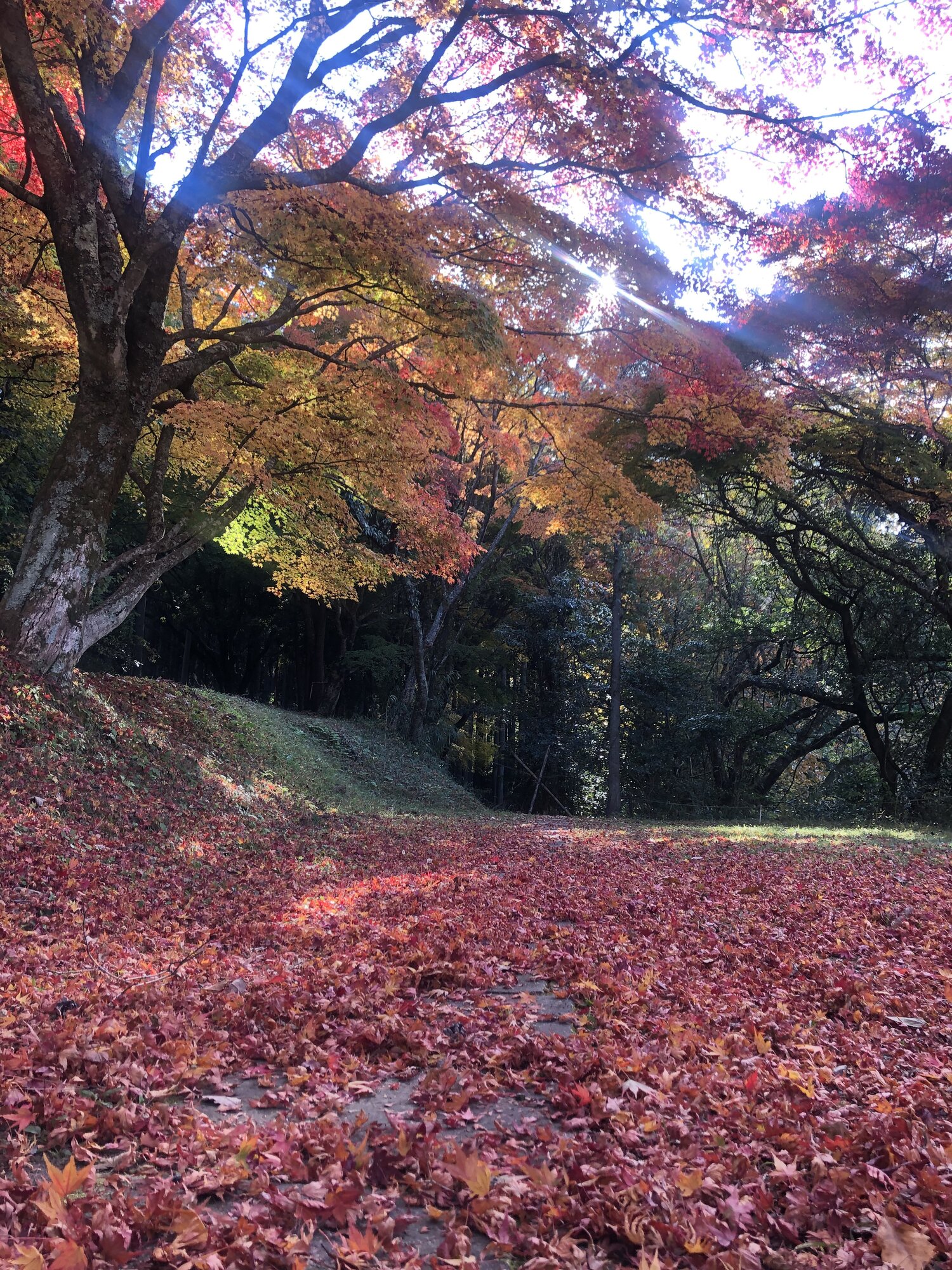
We visited in mid-November for the autumn foliage, and it delivered — maple color framing the falls from the observation deck is the shot everyone, including us, ends up taking. If you’d rather chase color of a different kind, Usa City’s own tourism pages note that rainbows tend to form in the spray on clear mornings in June and July, roughly between 7 and 8am, when the sun angle and the rainy-season water volume line up. We haven’t seen it ourselves, but it’s consistent enough across official sources to be worth planning an early start around.

Visiting Fukino Falls
Cost: Free
Hours: Always open — no gate or closing time
Parking (observation deck): Free, ~20–30 cars + 2 buses
Parking (pool viewpoint): Free, ~10 cars, narrow access road
Address: Ajimu-machi Fukino, Usa, Oita (展望台) / Ajimu-machi Yamanokuchi, Usa, Oita (滝つぼ)
Getting There
The falls sit in Ajimu, in the hills outside Usa, not far from the Ajimu interchange — a rental car is really the only practical way to reach either viewpoint. See our Yamanami Highway guide for what you’ll need, including the international driving permit rules.
Leave a Reply