This post contains affiliate links. If you book a rental car or tour through one of them, we may earn a small commission at no extra cost to you. We only recommend things we’d genuinely suggest to a friend.
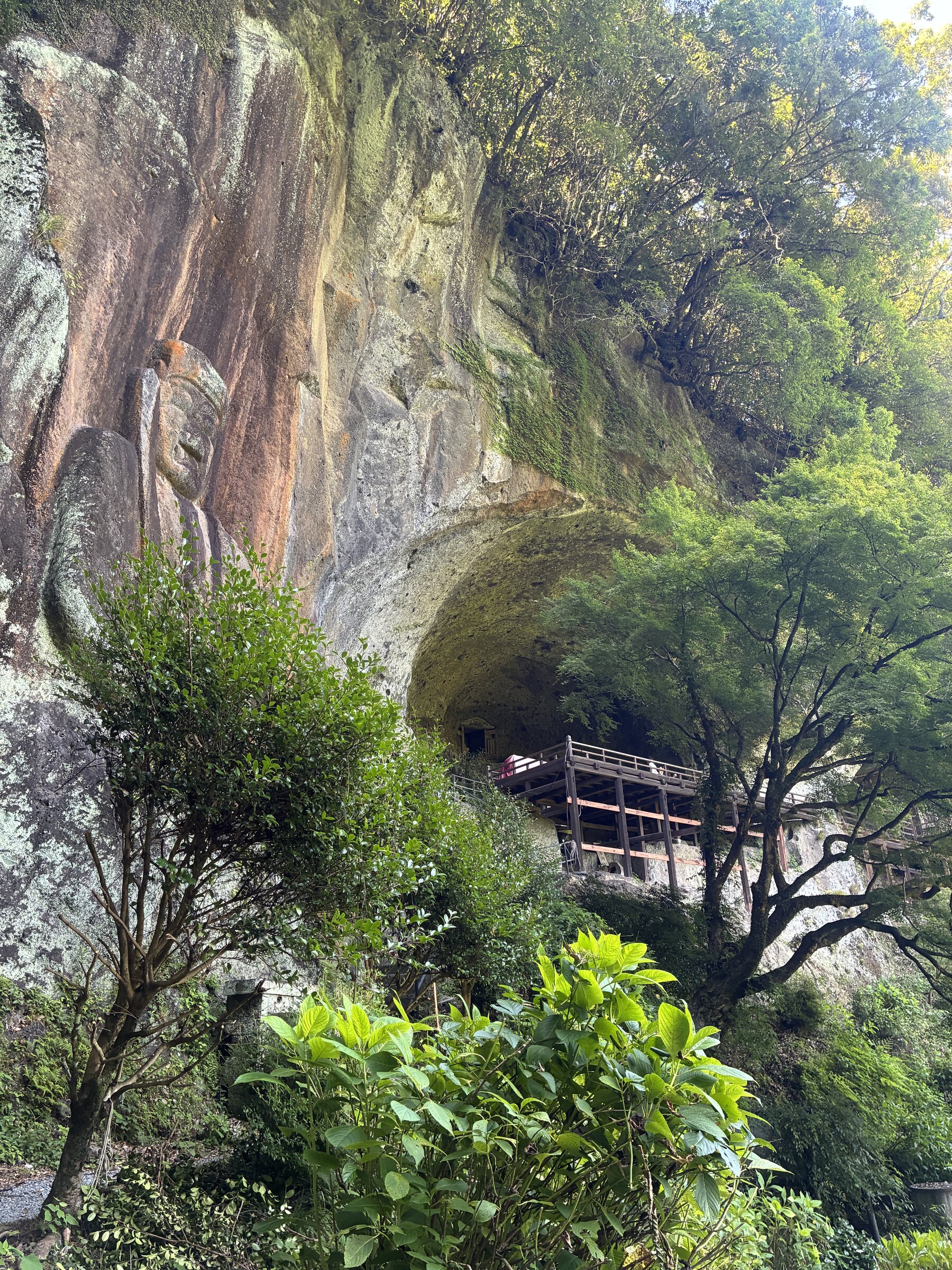
A Buddha Carved Into the Cliff Itself
Most people who’ve heard of Kyushu’s cliff-carved Buddhas know the Kunisaki Peninsula’s Kumano Magaibutsu. Almost no one outside Japan has heard of Fukoji, an hour or so south in Bungo-Ono, even though the central figure carved into its rock face is taller than a three-story building and ranks among the largest of its kind in the country.
We visited on the same July afternoon as Chinda Falls, on a whim more than a plan. There was no one else there. Just us, a wooden walkway bolted into the cliff, and an 800-year-old face looking down from the rock.
Getting There and What to Expect
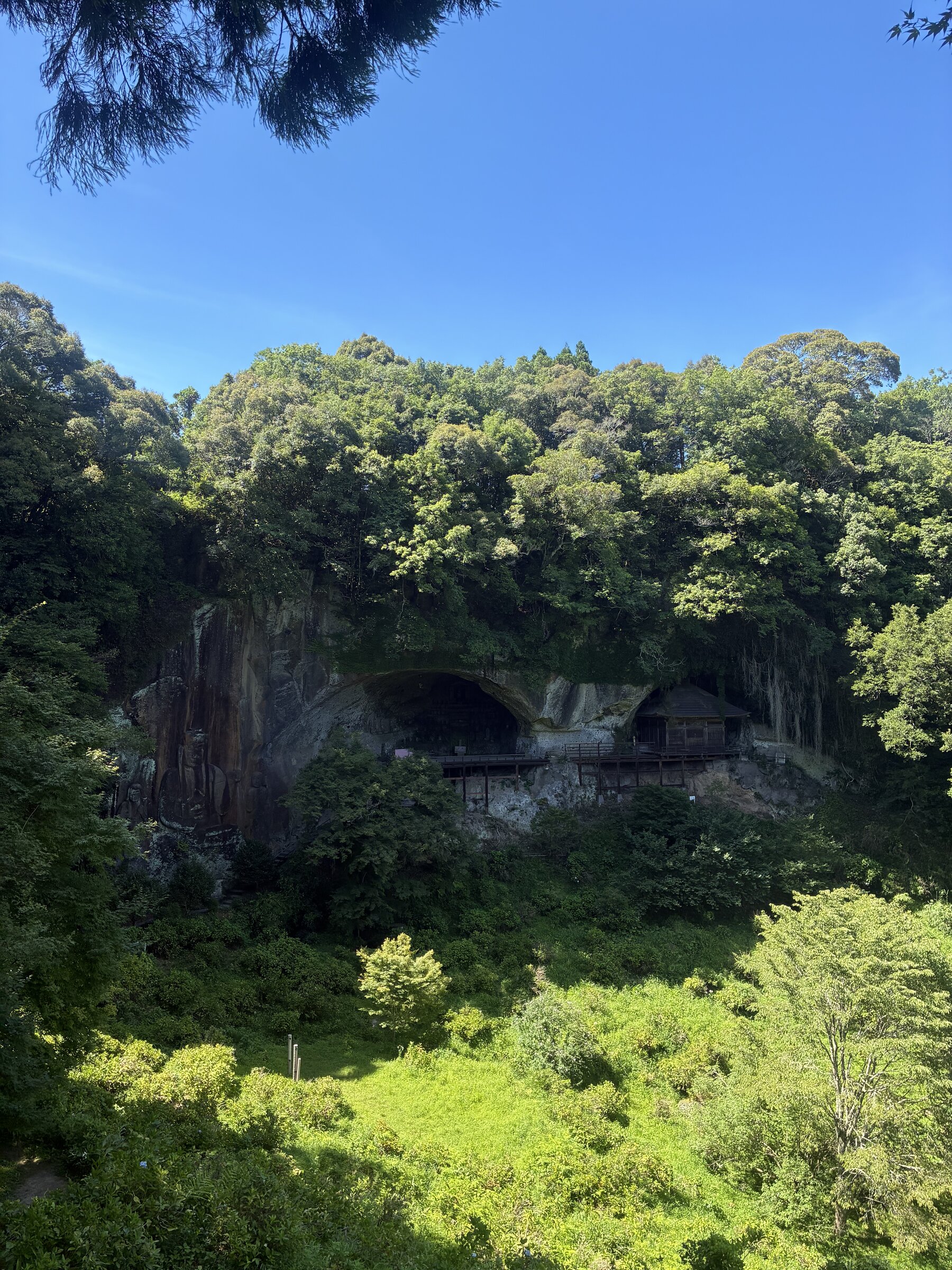
Fukoji sits in the hills above Asaji, about ten minutes by car from Asaji Station. There’s a free parking area a short walk (mostly downhill) from the temple gate. We didn’t see a posted admission fee or set visiting hours, and nothing online lists one either — treat it as an outdoor historic site you can visit during daylight hours.
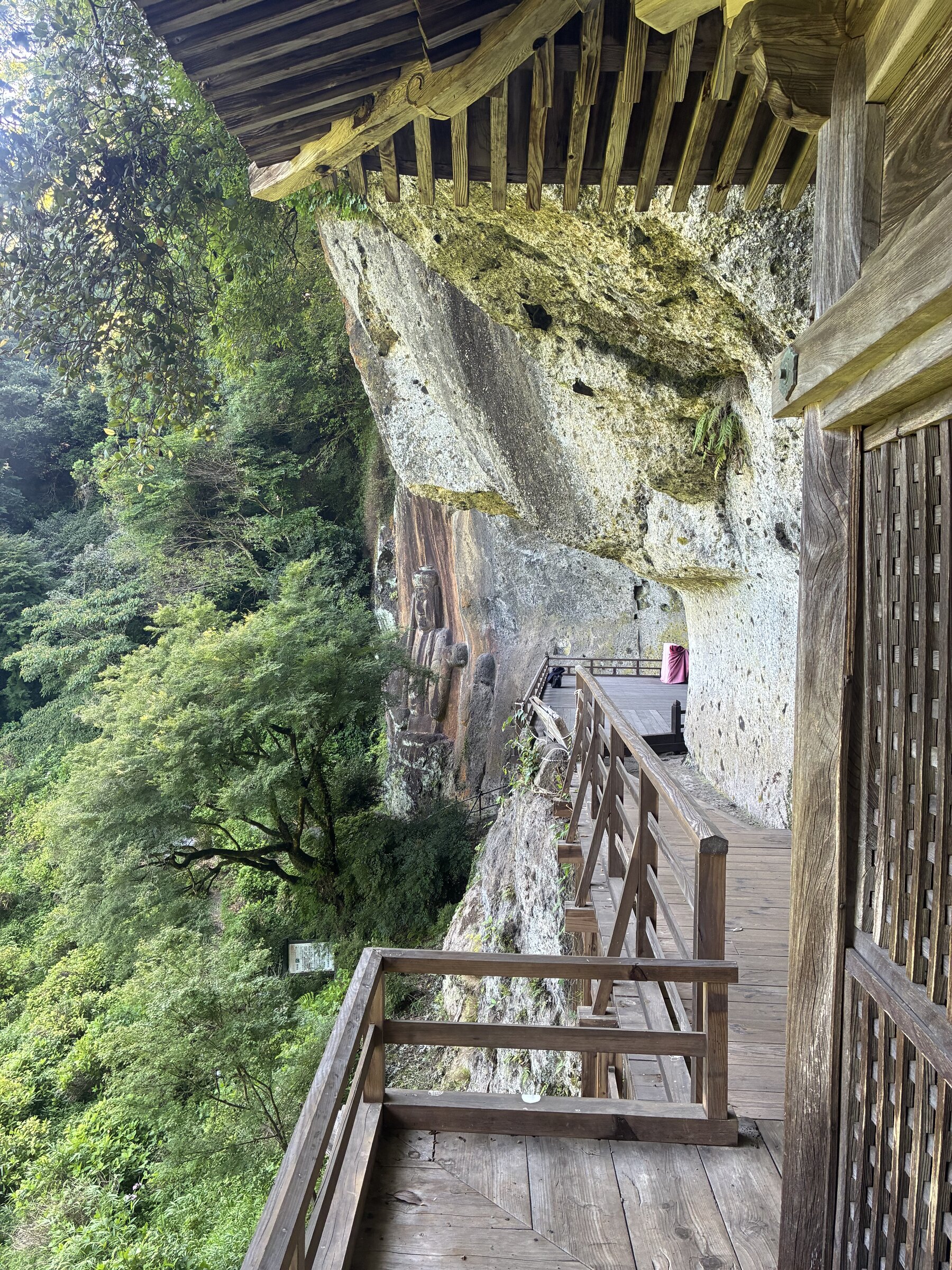
The walkway out to the main carving runs along the cliff face itself, with a wooden deck and railings the whole way — solid footing, no scrambling required. We had the place to ourselves on a weekday afternoon and spent about 30 minutes taking it in.
Cost: No admission fee found; effectively free to visit.
Hours: No fixed hours — an open-access historic site, best visited in daylight.
Parking: Free lot near the temple gate.
Eight Centuries in the Rock
The central figure is Fudo Myoo, a wrathful guardian deity usually shown with fangs and flames, carved directly into a cliff of welded tuff — the same volcanic rock, laid down by an Aso eruption, that made this kind of large-scale rock carving possible across this part of Oita. At around 11.4 meters tall, it’s the largest such statue in the prefecture and one of the largest anywhere in Japan.
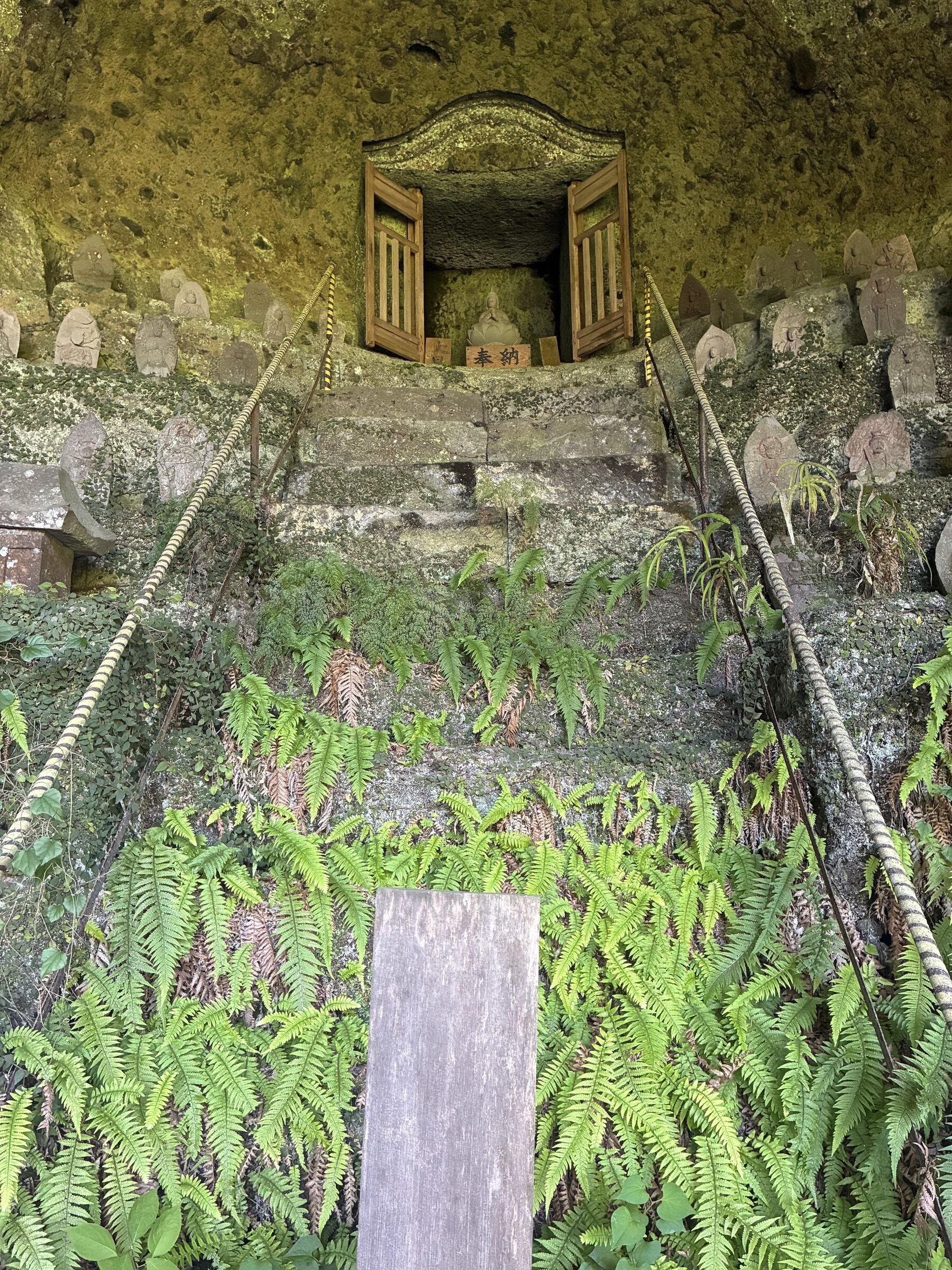
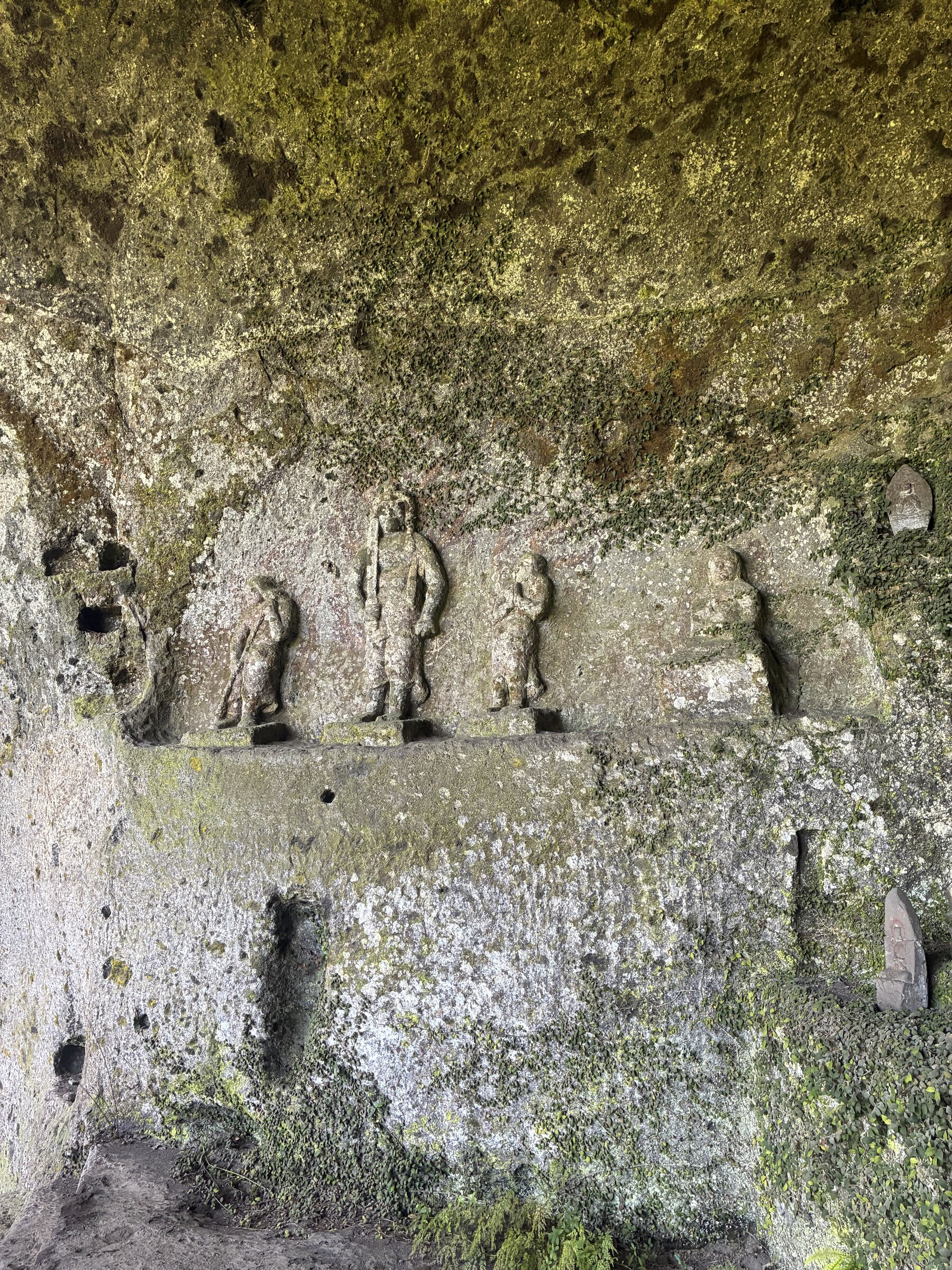
It was carved roughly 800 years ago, in the Kamakura period, and eight centuries of weather have softened what would have been a genuinely fierce expression — get close, though, and you can still make out the fangs. Above the main figure, two cave openings hold a fire ritual hall and dozens of smaller stone Buddhas and reliefs, tucked into niches along the rock. The temple is also known locally as an “hydrangea temple,” with blooms peaking around June — we visited a few weeks past that window, so don’t expect the flowers if you’re going in high summer.
FAQ
Do I need to pay or book in advance?
No — there’s no posted fee and no reservation system. It’s an open historic site.
Can I get here without a car?
Technically yes via Asaji Station and a taxi, but there’s no regular bus to the temple itself. A rental car is the practical way to visit — see our Yamanami Highway guide for rental and international driving permit basics.
How does it compare to the Kumano Magaibutsu on Kunisaki?
Kumano is more famous and involves a steeper climb up stone steps. Fukoji’s main figure is comparable in scale, the walkway is easier underfoot, and — at least when we went — there was no one else there.
How long should I plan for?
About 30 minutes is enough to walk the cliff-side deck and see the main carving and the side caves.
For something on a much bigger scale, Higashi Shiiya Falls near Usa is worth the drive north — an 85-meter drop known as “Kyushu Kegon” and one of Japan’s official top 100 waterfalls.
Leave a Reply