How much does a trip to Kyushu actually cost? Most generic Japan budget guides are written for Tokyo and Kyoto, which doesn’t translate well to a rural, car-dependent itinerary through Oita and Miyazaki. Here’s a more honest, first-hand breakdown — built partly from actual prices we’ve paid at the places covered on this site.
This post contains affiliate links. If you book a rental car or tour through one of them, we may earn a small commission at no extra cost to you. We only recommend things we’d actually use ourselves.
Getting around: rental car vs. public transit
A rental car out of Oita Airport runs around ¥6,500 (roughly $45–55) per day for a compact, before fuel and the occasional toll — and honestly, for the spots on this site, a car is close to essential. Fuel for a week of regional driving typically adds another ¥10,000–15,000 depending on how much ground you cover. You’ll need an International Driving Permit sorted before you land; we cover exactly what that involves in our Yamanami Highway guide. If you’re sticking closer to Beppu, Yufuin, or Fukuoka itself, trains and buses can work, but budget more time and expect to skip several of the spots we cover that simply aren’t on a train line.
Read the Yamanami Highway & rental car guide →
Accommodation
Nationwide ryokan pricing guides quote a median around ¥44,660 per person, per night with meals included — but that figure is skewed hard by famous destinations like Hakone and Kyoto. In rural Oita, a comfortable ryokan or guesthouse with a private or shared onsen is realistically ¥12,000–25,000 per person with dinner and breakfast included, and simple business hotels in Beppu or Oita City run ¥6,000–10,000 a night for a single room if you’re not fussed about the onsen experience. Budget accordingly: staying in a ryokan every night adds up fast over a week, so a mix of one or two splurge nights and cheaper business-hotel nights in between is a realistic middle ground.
Food
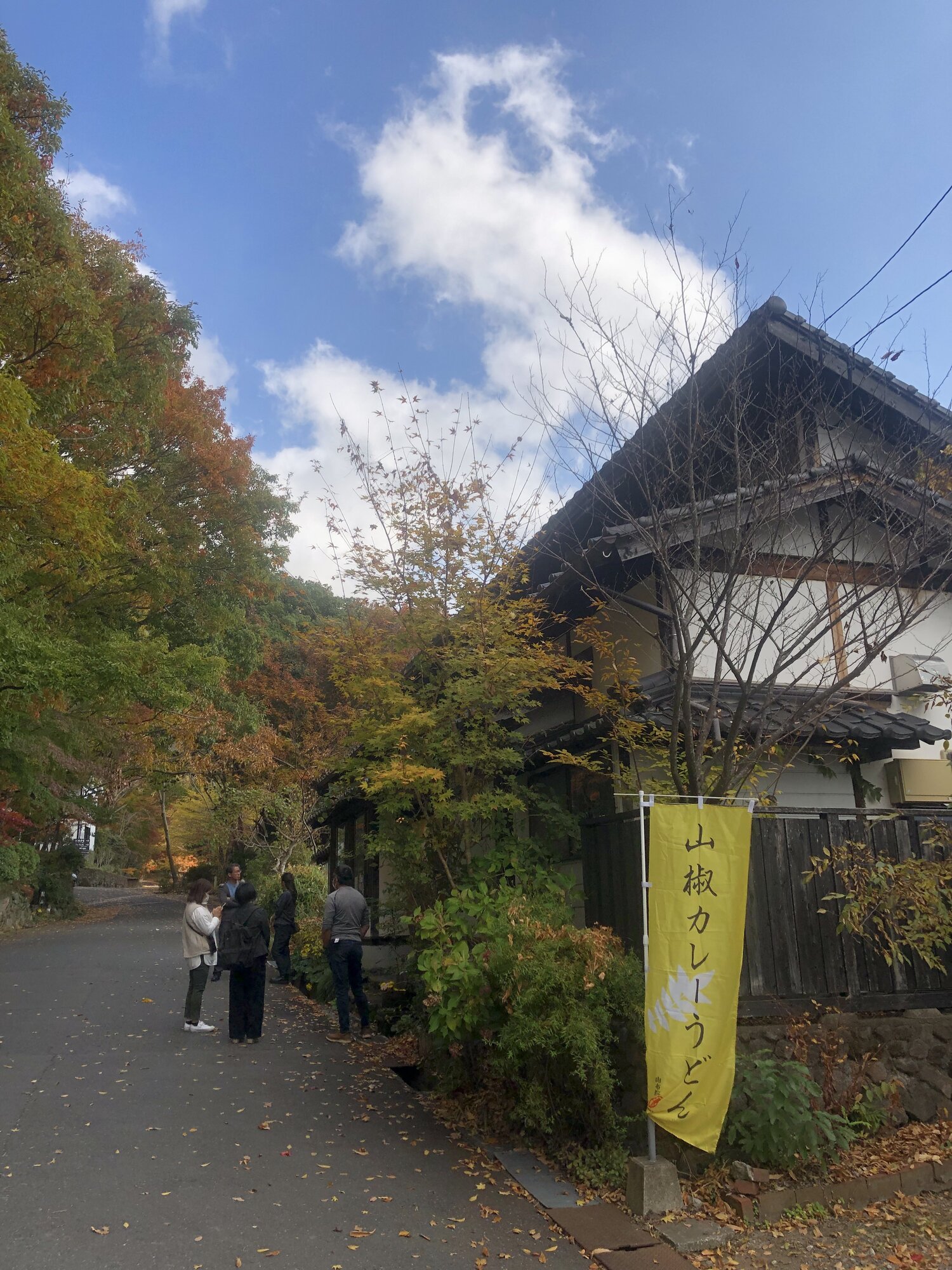
This is where rural Kyushu is noticeably cheaper than a Tokyo trip. A proper sit-down lunch at a local restaurant — like the sansho curry udon at Kikusuke above Yufuin — runs ¥1,000–1,400. A more substantial hearth-grilled dinner set, like at Yomoyama by Kinrinko Lake, lands around ¥2,500–3,500 per person. Convenience-store breakfasts and lunches (genuinely solid in Japan) can bring your daily food budget well under ¥3,000 if you’re not eating out for every meal. Figure ¥3,000–5,000 per person per day as a comfortable, not-cutting-corners average.
Activities and attractions
More of these are free than you’d expect — waterfalls, coastlines, and shrine grounds (Chinda Falls, Matama Coast, and Amano Yasukawara among them) don’t charge admission. Where there is a fee, it’s usually modest: onsen bathing runs ¥500–2,000 depending on the bath, the Mount Tsurumi ropeway is ¥1,200 one-way / ¥1,800 return for an adult, and a horseback riding trial lesson in the Kuju Highlands is ¥2,200–2,750 plus a fixed equipment fee. None of these are the budget-breakers on a Kyushu trip — the car and the accommodation are.
Sample weekly budget (per person, two people splitting a rental car)
| Category | Lean budget | Comfortable |
|---|---|---|
| Rental car + fuel (split two ways, 7 days) | ¥8,000 | ¥11,000 |
| Accommodation (7 nights) | ¥56,000 | ¥120,000 |
| Food (7 days) | ¥18,000 | ¥30,000 |
| Activities & onsen | ¥8,000 | ¥15,000 |
| Total (excl. flights) | ~¥90,000 | ~¥176,000 |
That’s before international flights, which vary too much by origin city to estimate honestly here. The lean-budget column assumes business hotels and mostly free/cheap activities; the comfortable column assumes a ryokan stay every night and no corner-cutting on meals. Most travelers land somewhere in between. For help deciding how many days to actually budget for, see our itinerary length guide.
Leave a Reply