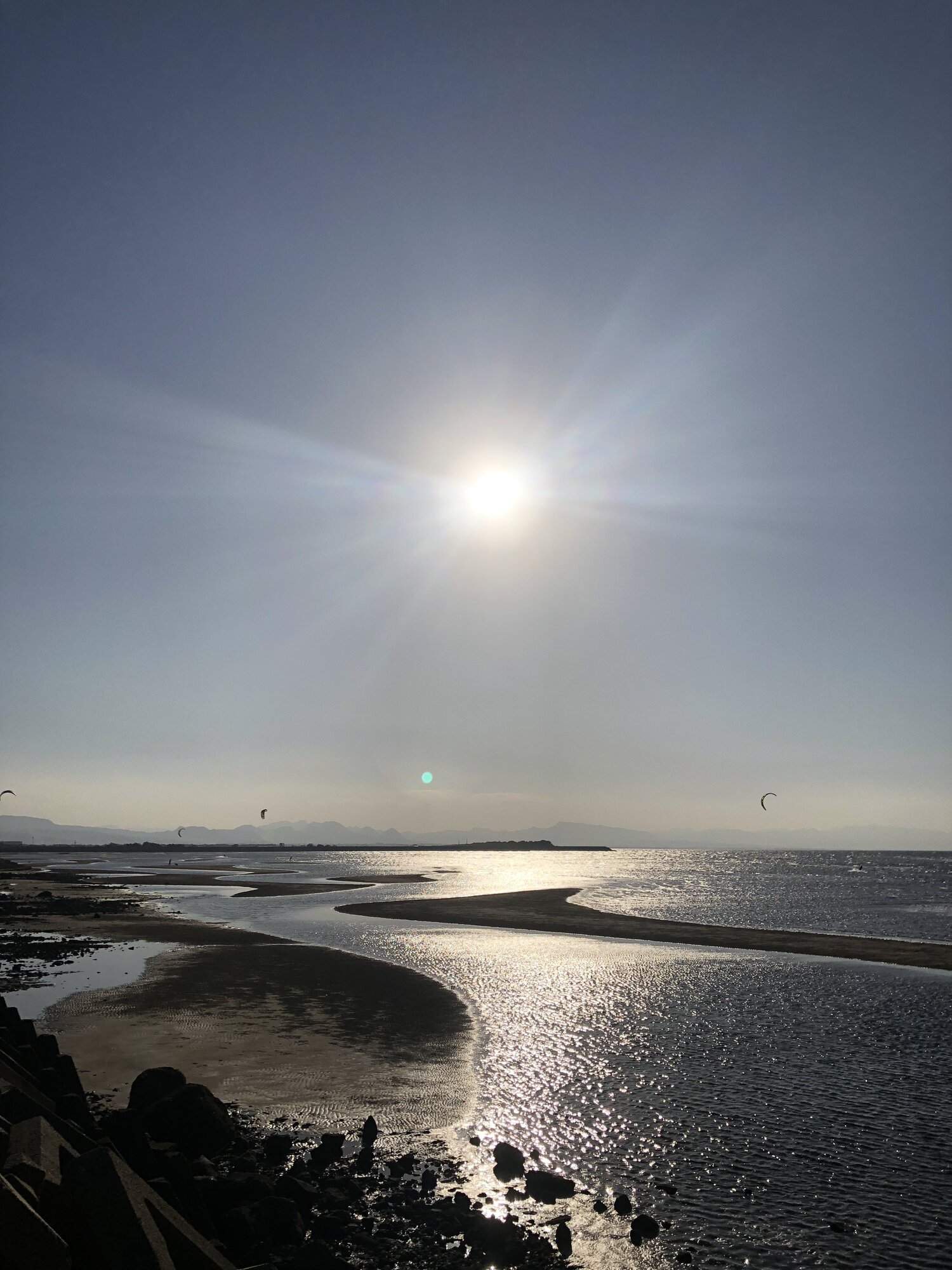
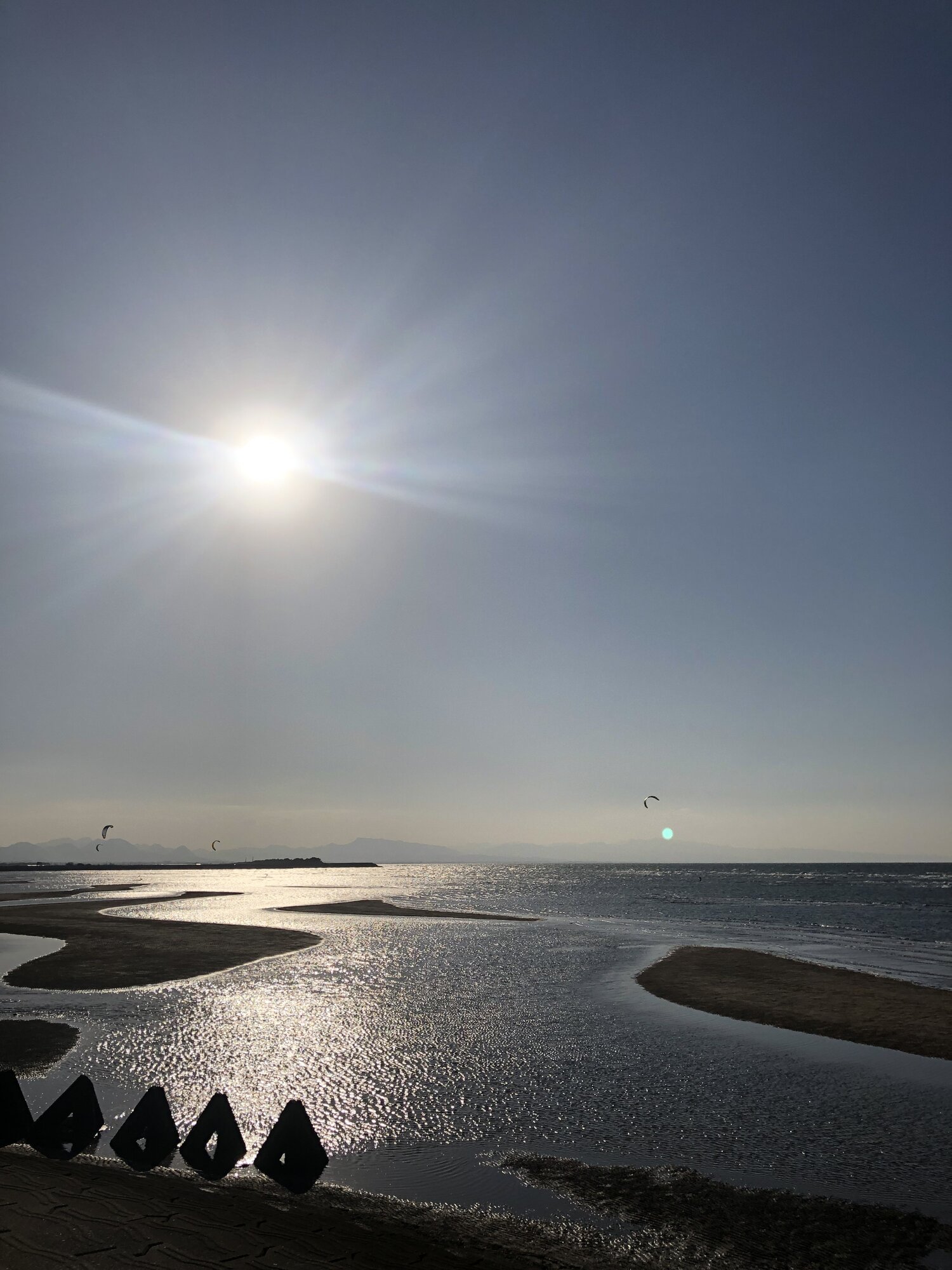
Matama Coast doesn’t look like much on a map — a stretch of tidal flat on the Kunisaki Peninsula’s west side, in Bungotakada City. What brings people here is timing: when the tide goes out, the water left behind carves itself into winding, S-shaped channels across the sand, and the whole thing lights up when the sun is low. We visited on a November afternoon, well before sunset, and the channels were still striking even in flat, three-o’clock light.
This post contains affiliate links. If you book a rental car or tour through one of them, we may earn a small commission at no extra cost to you.
We should be upfront about that timing, since Matama’s reputation is built entirely on sunset: it’s registered among Japan’s 100 Best Sunset Views (日本の夕陽百選), and the town brands the whole area “夕陽の郷” — the Village of the Setting Sun. We didn’t time our visit for golden hour, so this is a midday report, not a sunset one. The tidal channels don’t need sunset to be worth seeing; the color show is a separate reason to come back.
Reading the Tide
The channels are a tide phenomenon, not a permanent feature — they only appear in the hours around low tide, when enough of the flat is exposed for the retreating water to carve its own paths through the sand. Bungotakada City actually publishes a monthly “tideflat-sunset calendar” (干潟夕陽ごよみ) for exactly this reason: the shape of the channels and the timing of low tide both shift through the month, so a coast that looks unremarkable at high tide can look completely different a few hours later. If you’re planning around the classic photo, check the tide calendar before you check the sunset time.
A Beach for Watching, Not Swimming
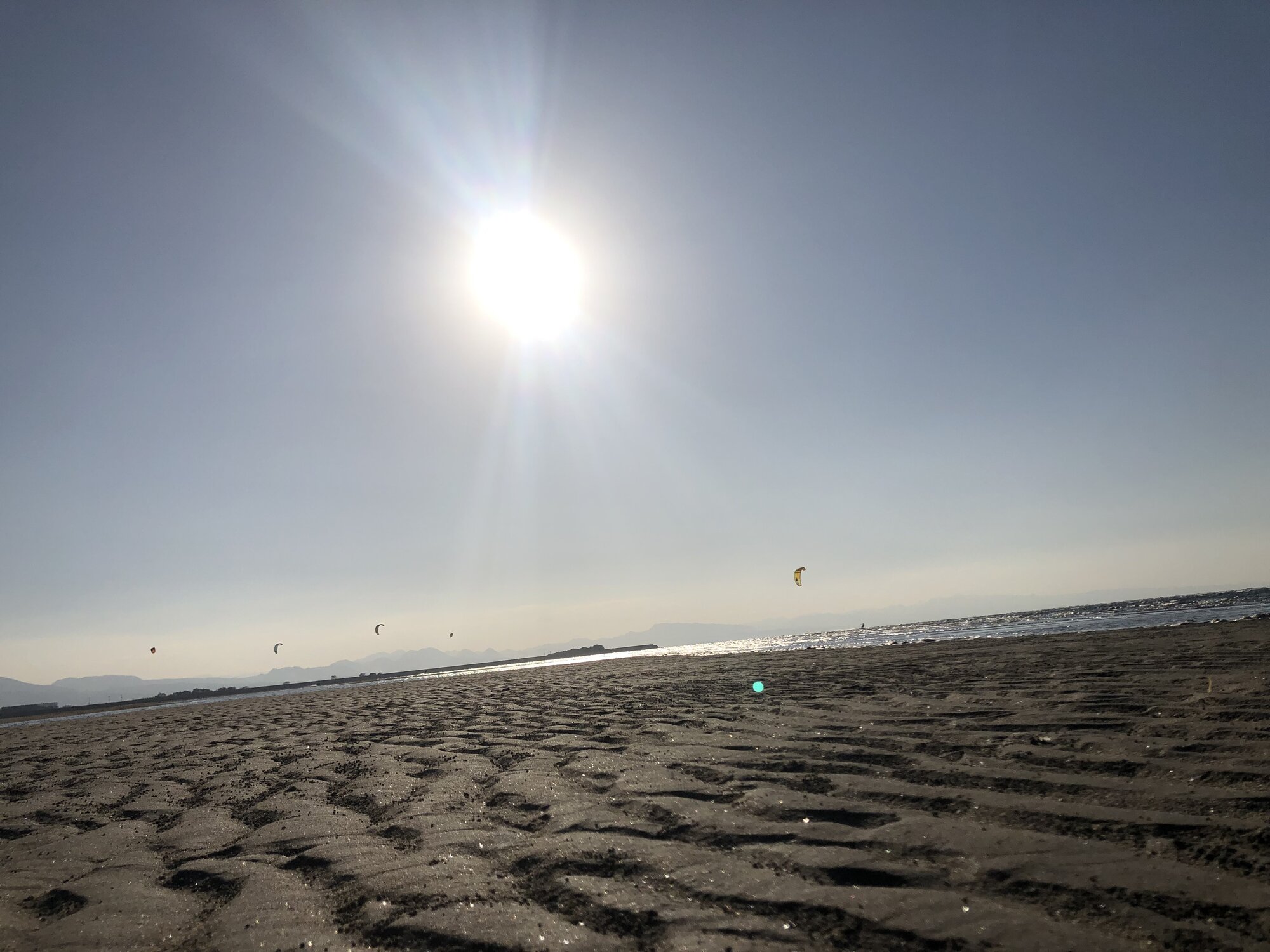
What we didn’t expect was the kites. Matama gets steady wind off the coast, and there were half a dozen kitesurfers out working the water the whole time we were there, along with the usual mix of people just walking the seawall. It’s not a swimming beach in any conventional sense — there’s no lifeguard, and the appeal is entirely the view and the wind, not the water itself.

Visiting Matama Coast
Cost: Free — Matama Coast is an open public beach with no admission fee.
Hours: No gate or set hours; it’s a natural tidal beach, open access at any time. (There’s no lighting, so plan around daylight or a bright evening if you’re chasing sunset.)
Parking: Free lot near the coast, roughly 50 spaces. Can fill up during spring razor-clam season (March–May).
Address: 5125 Usuno, Bungotakada, Oita 872-1101
Getting There
Matama Coast is about 30–40 minutes by car from Usa Interchange on the Higashi-Kyushu Expressway. There’s a free parking area right by the coast, though it’s worth knowing it can fill up during spring razor-clam season (March–May) — not a concern for a quiet November afternoon, but worth factoring in if you’re visiting in season. Since 2023 there’s also a small terrace building nearby with an observation deck and a café, though it didn’t exist yet when we visited. The same International Driving Permit rules apply as anywhere else in Kyushu — see our Yamanami Highway rental car guide for the details.
Leave a Reply