This post contains affiliate links. If you book a rental car or tour through one of them, we may earn a small commission at no extra cost to you.
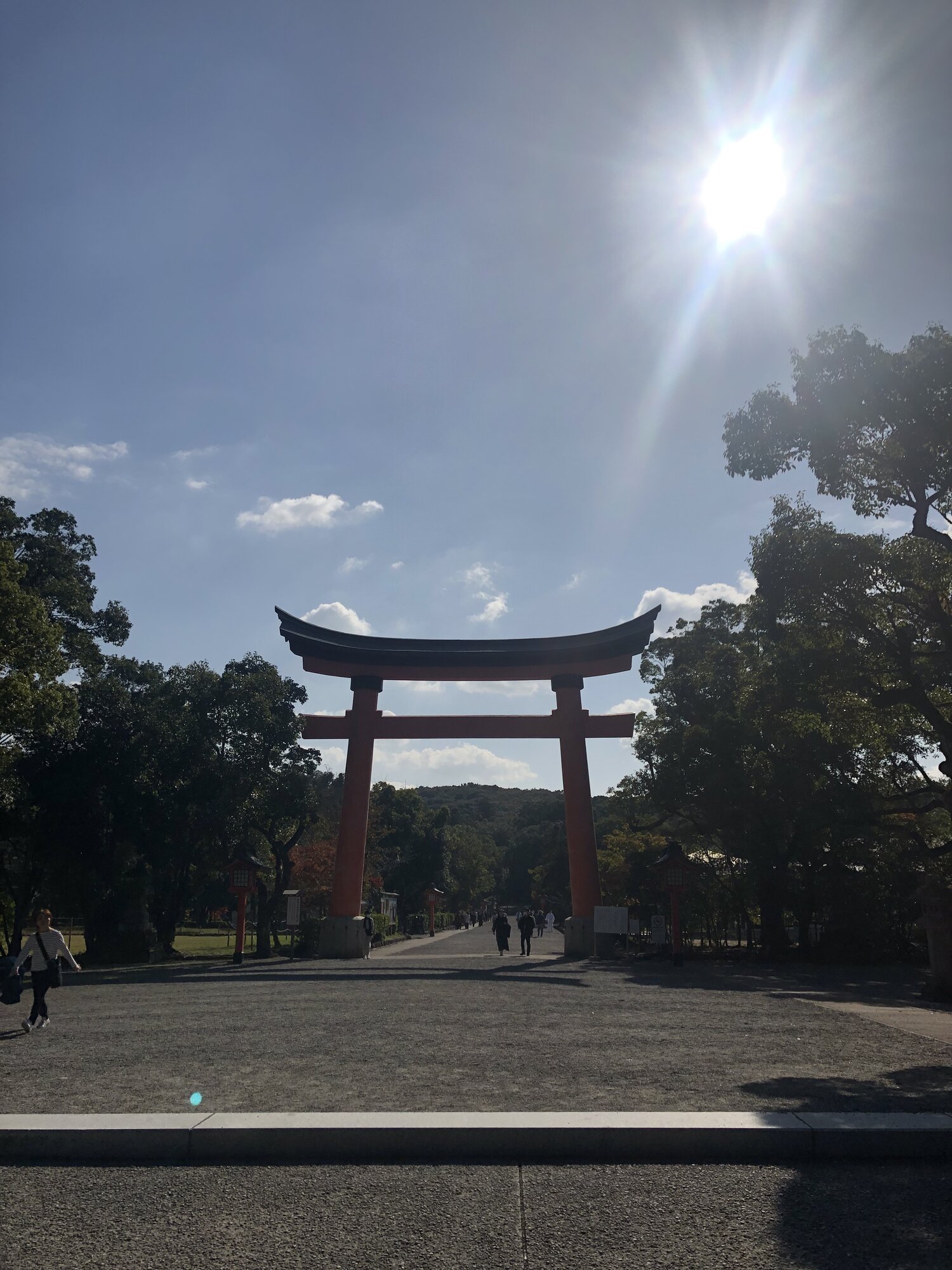
Most travelers who make it to Oita go for the hot springs of Beppu or Yufuin. Few detour to Usa, a quiet city near the coast that happens to hold one of the most important shrines in Japan — not that you’d necessarily know it from how few foreign visitors we passed on the day we went. Usa Jingu (宇佐神宮) is the head shrine of Hachiman worship nationwide, the source from which roughly 44,000 branch shrines across Japan trace their lineage, and its forested approach and vermillion halls are worth the detour on their own, history aside.
The Source of Every Hachiman Shrine in Japan
If you’ve ever visited a shrine called Hachiman-gū anywhere in Japan — and there’s a good chance you have, since they’re among the most common shrine names in the country — Usa Jingu is where that lineage begins. Tradition holds that in 571, a three-year-old child appeared before a priest named Ōga no Higi near a pond on this site and identified himself as Hachiman, the divine spirit of Emperor Ōjin. The shrine was established at its present location on Mt. Ogura in the early 8th century, traditionally dated to 725, and has been rebuilt on the same footprint many times since.
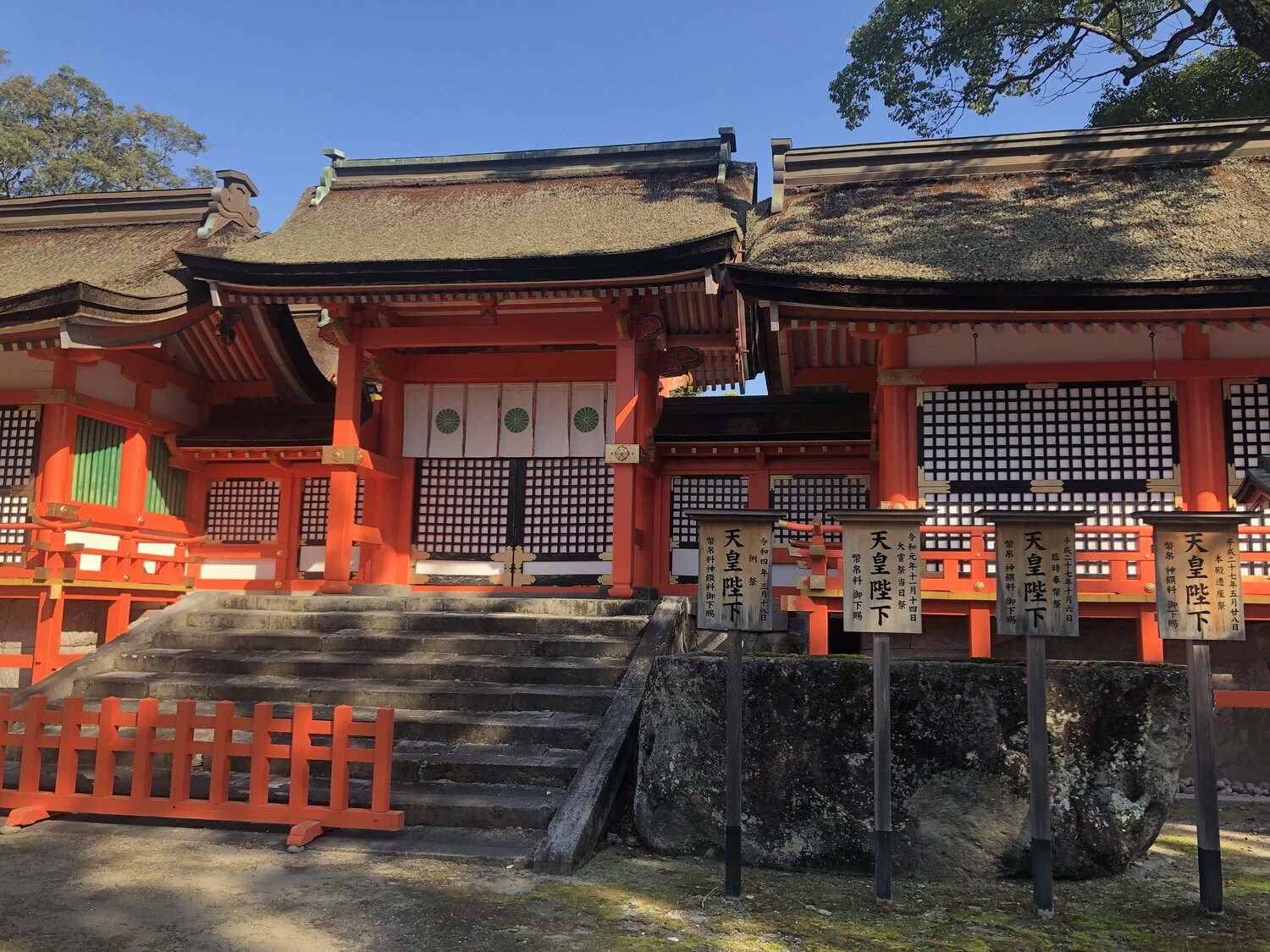
The shrine enshrines three deities side by side: Hachiman himself (Emperor Ōjin), Empress Jingū (his mother), and, in the central and most prominent of the three halls, Hime-Ōkami, a trio of goddesses associated with Munakata. All three halls together are designated a National Treasure. The standing buildings date to an Edo-period reconstruction from 1855–1861, built in Hachiman-zukuri, a distinctive architectural style — two parallel gabled roofs joined into a single structure — that originated here and takes its name from the shrine’s own deity.
Historically, Usa Jingu and Ise Grand Shrine were jointly treated as the two most important sites for imperial ancestor worship in Japan, a pairing known as nisho sōbyō (二所宗廟). That’s rarefied company for a shrine most foreign visitors have never heard of.

The Oracle That Nearly Changed Who Could Be Emperor
Usa Jingu’s oracles once carried enough political weight to threaten the imperial succession itself. In 769, the Buddhist monk Dōkyō had risen to extraordinary influence over Empress Shōtoku after treating her illness, eventually becoming Prime Minister and then “Dharma King.” That year, his associates announced that an oracle from Usa Hachiman had declared the realm would find peace if Dōkyō became emperor — a direct challenge to the unbroken imperial bloodline.
The Empress sent the courtier Wake no Kiyomaro to Usa to verify the message in person. He returned instead with a contrary oracle: that only those of imperial blood could ever sit on the throne, and an unworthy claimant should be removed. Furious, the Empress exiled him. But Dōkyō’s power collapsed within the year after her death, and Kiyomaro was later celebrated as the loyal subject who had, from this shrine, helped preserve the imperial line. It’s a strange thing to stand at the top of the stone steps here and realize you’re looking at the site of a 1,250-year-old succession crisis.
Where Shinto and Buddhism First Came Together
Usa Jingu is also widely credited, together with the Rokugō Manzan temple network on the nearby Kunisaki Peninsula, as the birthplace of shinbutsu-shūgō — the fusion of Shinto and Buddhist practice that shaped Japanese religious life for over a thousand years, right up until the Meiji government forcibly separated the two in the 1870s. A Buddhist temple, Mirokuji, once stood directly beside the shrine as part of a single fused shrine-temple complex called Usa Hachimangū Mirokuji. It was dismantled after the Meiji separation, and only its foundation stones remain today, but the shrine is generally regarded as one of the earliest sites in the country where kami and buddhas were worshipped as two aspects of the same reality.
Walking the Grounds
The shrine sits across a low, forested hill, split into the Gegū (Lower Shrine) near the entrance and the Jōgū (Upper Shrine) at the summit, where the three honden stand. Getting between them means a walk up a long stone stairway shaded almost completely by camphor and cedar canopy — genuinely one of the more atmospheric shrine approaches we’ve walked in Kyushu, torii and stone lanterns catching light through the leaves the whole way up.
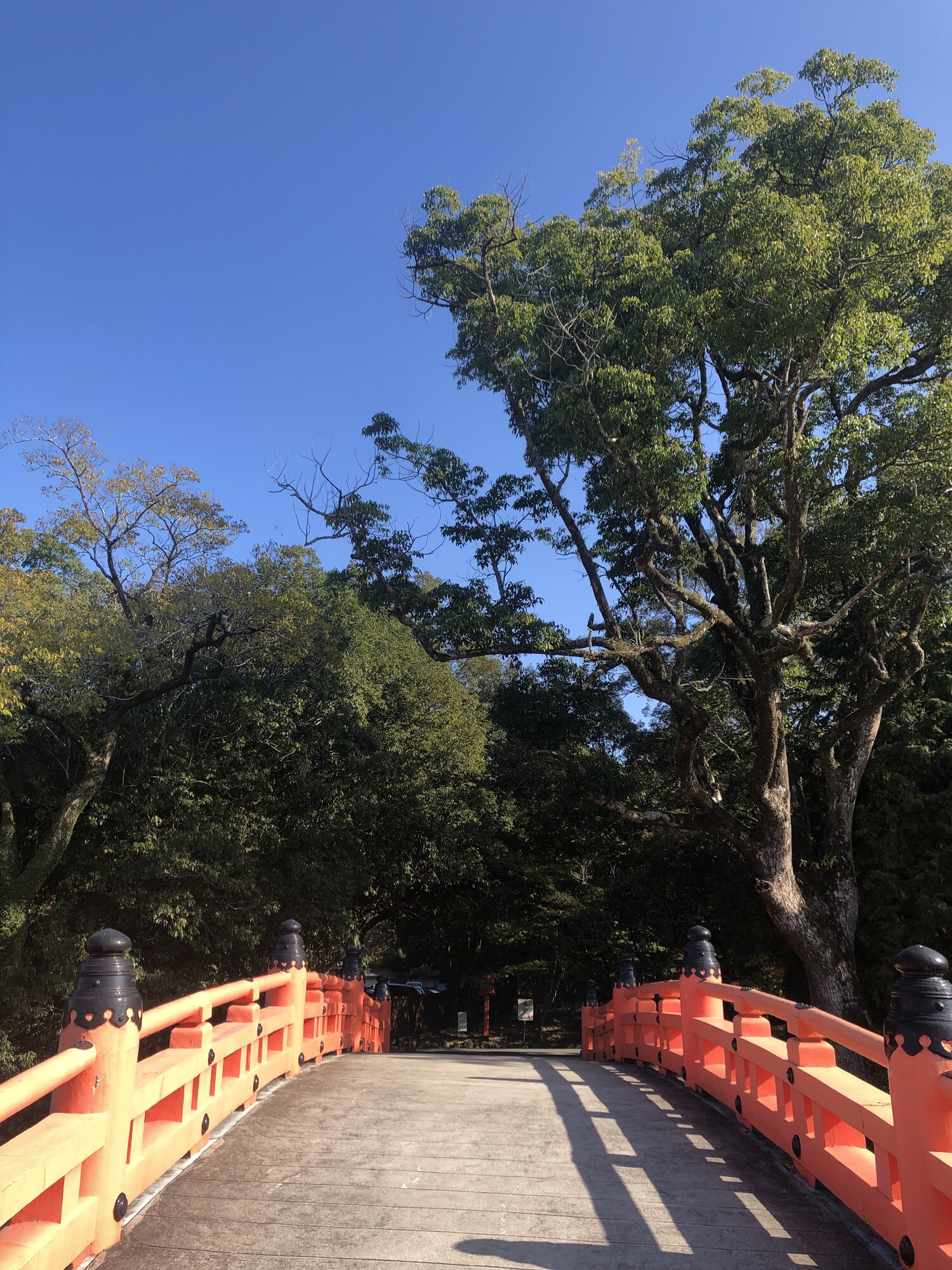
Near the honden stands a massive camphor tree, roped off with shimenawa and shide, that visitors touch or bow to for good fortune — a sign asks that people stop leaving coin offerings wedged into its bark. Elsewhere on the grounds, the vermillion, roofed Kurehashi Bridge (built in 1622 and itself an Important Cultural Property) crosses a stream near the sacred Hishigata Pond, said to be where the child-deity first appeared.
Visiting Usa Jingu
Cost: Free to enter the grounds. The small Treasure Hall museum charges around 300 yen for adults.
Hours: Upper Shrine gate roughly 6:00–18:00 (extended around New Year). The Treasure Hall keeps shorter hours and is closed at least Mondays — worth confirming locally before a special trip just for it.
Parking: Two lots near the shrine (Omotesandō and an outer garden lot), a few hundred yen for the day.
Access: About 15 minutes’ drive from Usa IC on the Higashi-Kyushu Expressway. By train, it’s a short bus or taxi ride from JR Usa Station on the Nippō Main Line.
Address: 2859 Minamiusa, Usa, Oita
Getting There
Usa is well off the usual Beppu–Yufuin circuit, so a rental car is genuinely the easiest way to fold it into a Kyushu itinerary — it sits roughly 45–60 minutes north of Beppu depending on traffic. If you’re driving in from elsewhere in Oita or up from Aso, our guide to renting a car and getting an International Driving Permit in Japan covers what you need before you go. If you’d rather not drive, JR Usa Station connects to both Beppu and Kokura on the Nippō Main Line, with a short bus or taxi ride on to the shrine from there.
Leave a Reply