This post contains affiliate links. If you book a rental car or tour through one of them, we may earn a small commission at no extra cost to you.
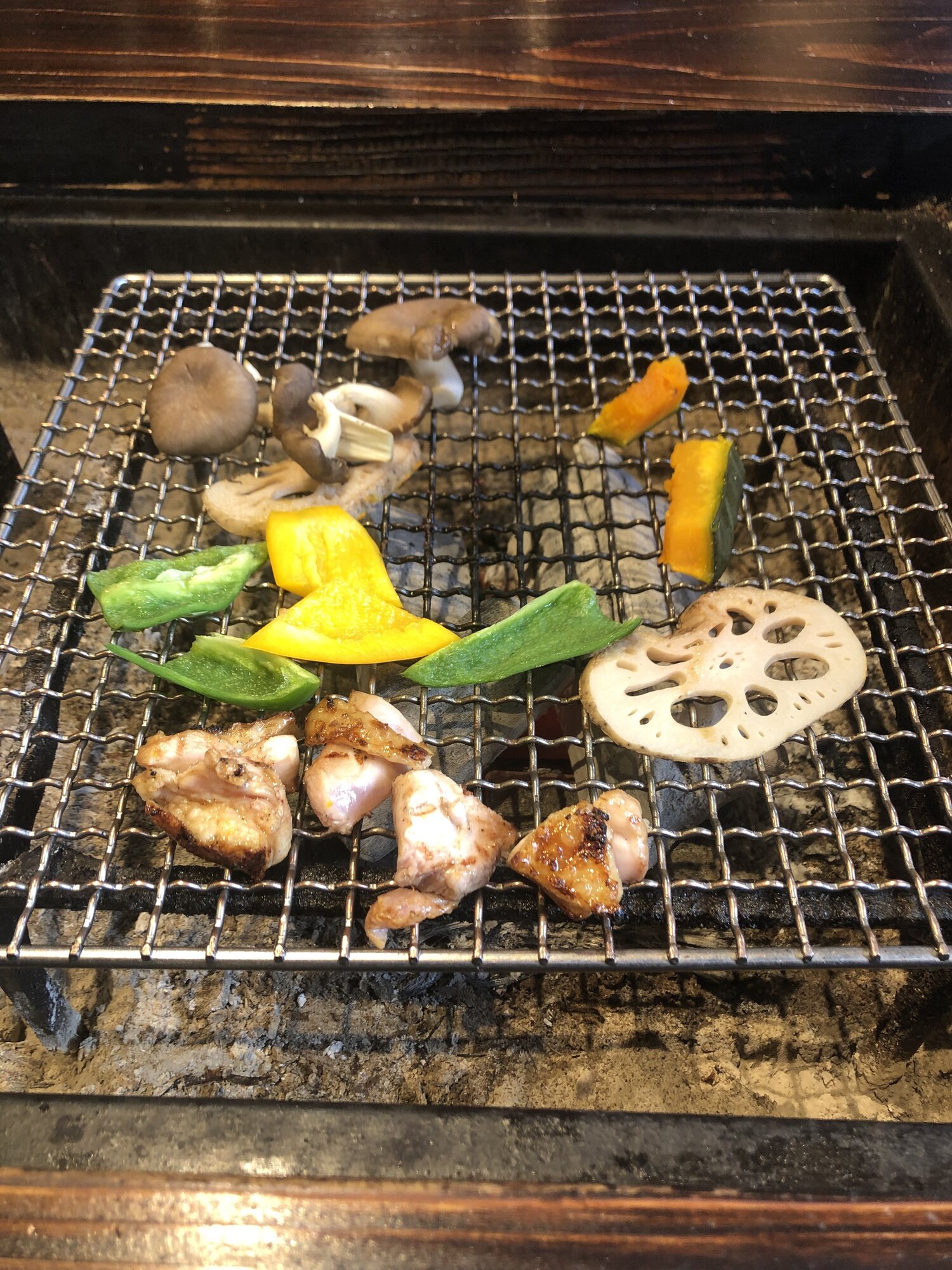
Down a side passage off Yunotsubo Yokocho, Yufuin’s main shopping street, Yomoyama (四方山) serves lunch and dinner the old way: a sunken charcoal hearth built right into your table, and a tray of raw ingredients you cook yourself. It’s a style called 囲炉裏焼き (irori-yaki), and the dining room sits close enough to Kinrinko Lake that our table looked straight out over the water — herons, koi, and all.
How Irori-Yaki Works
The format is simple and doesn’t need much explanation, which is part of the appeal. A tray arrives with a few pieces of marinated chicken, shiitake and other mushrooms, lotus root, pumpkin, and peppers, along with a small grill rack that sits directly over the hearth’s coals. You cook everything yourself, at your own pace, pulling pieces off as they finish. Rice and a clear miso-based soup, ladled from a pot suspended over the same coals, round out the set, along with a few small pickled and simmered side dishes.

It’s unhurried in a way that suits Yufuin’s pace generally — there’s no rush to finish, and the charcoal keeps everything warm as you work through the tray.

A View Worth Lingering Over
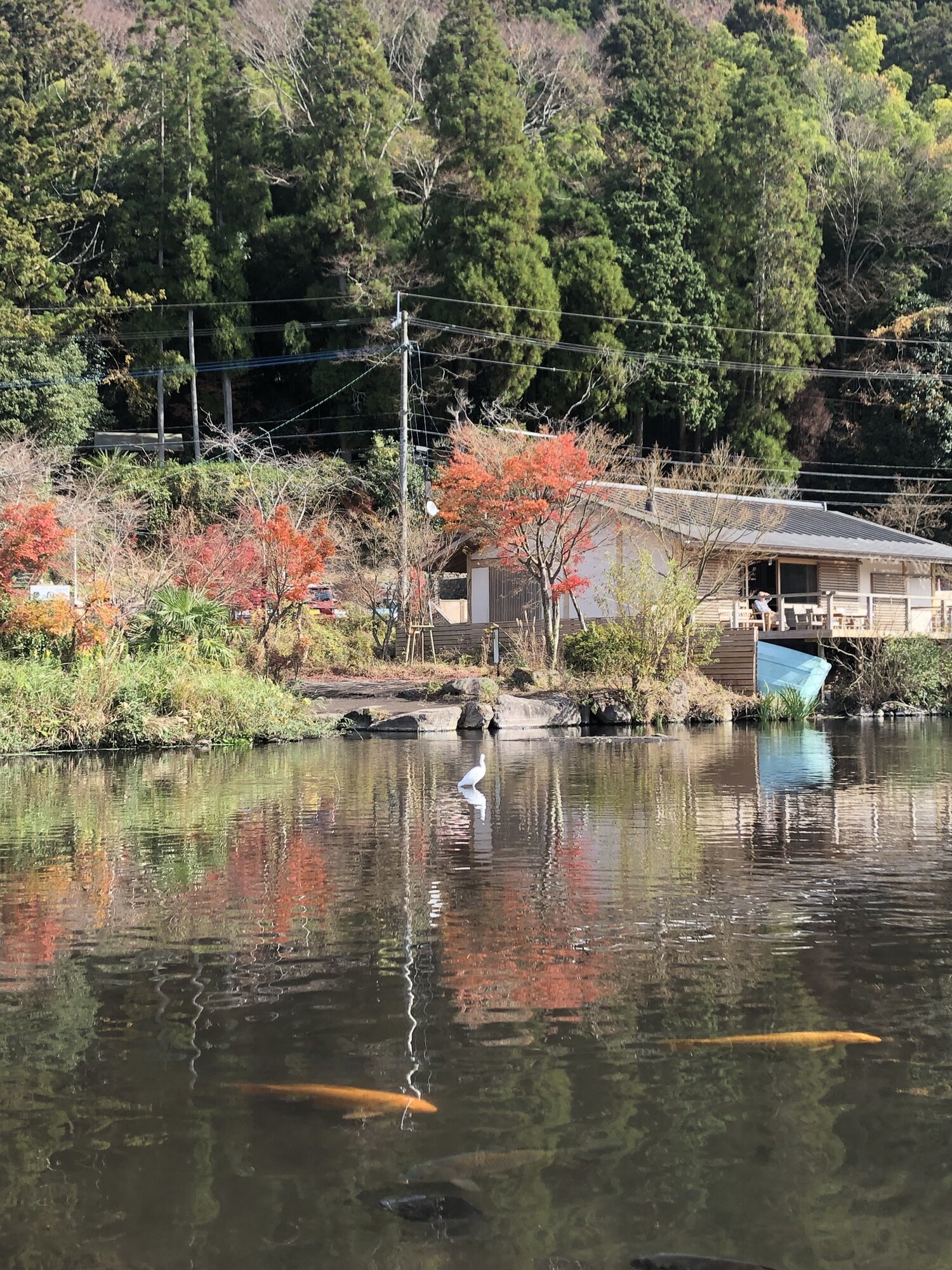
Kinrinko (金鱗湖, “Golden Scale Lake”) is small — well under a kilometer around — but it’s the emotional center of Yufuin. The name comes from a 19th-century scholar who reportedly saw the local fish flash gold in the evening light and renamed the pond on the spot. Warm spring water feeds in alongside cooler stream water, and the temperature difference is what produces the lake’s famous morning mist, especially from autumn into winter. We were there in the afternoon rather than at dawn, so no mist for us, but the koi were doing their part — a couple of large orange ones cruising right past a heron working the shallows.
A Torii at the Water’s Edge
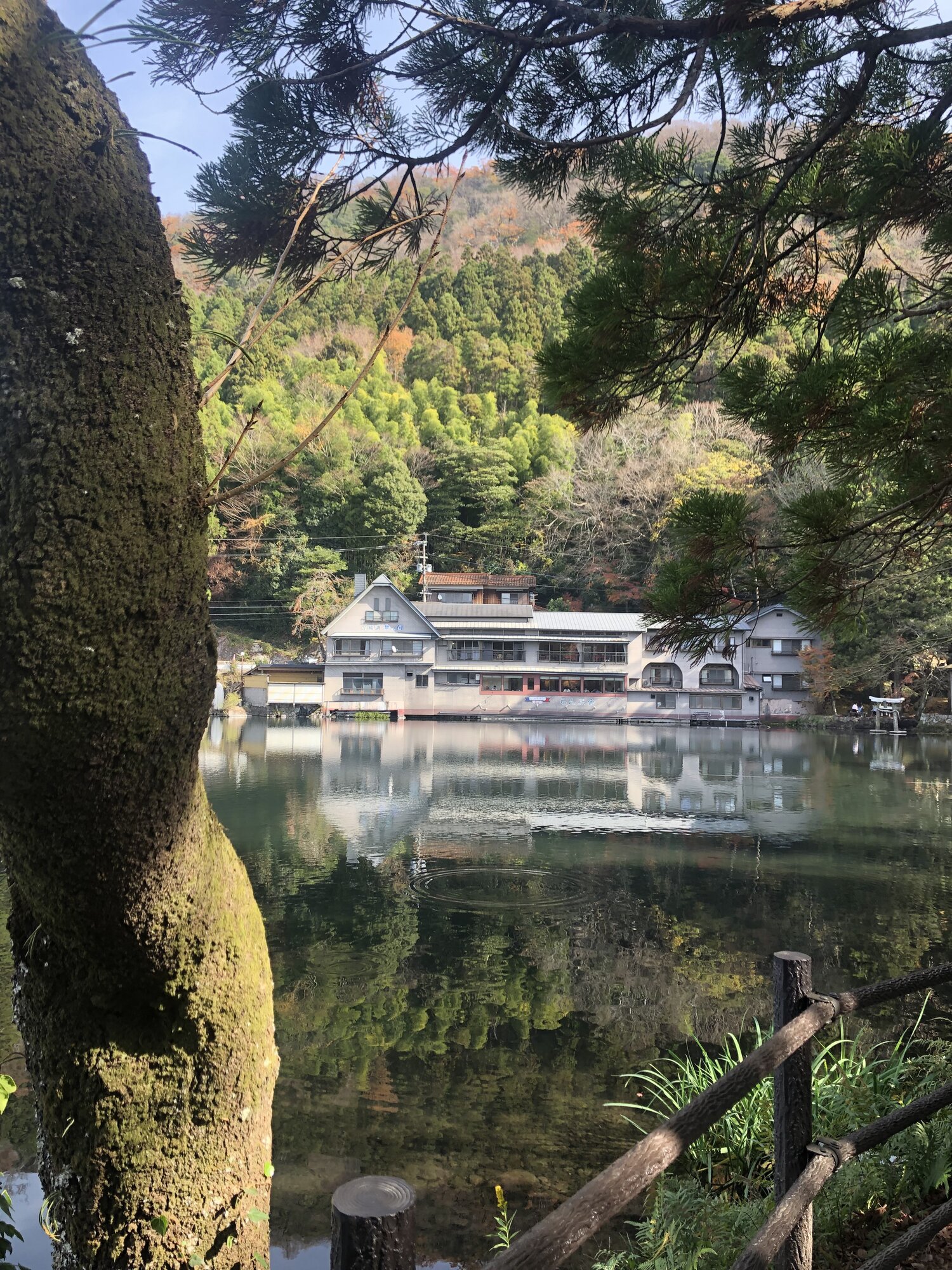
Walk the lake’s edge and you’ll spot a stone torii gate standing right in the water at the southern end — it belongs to 天祖神社 (Tenso Shrine), a small shrine whose current gate dates to the 1830s and was relocated here from a neighboring temple during the Meiji-era separation of Buddhism and Shinto. It’s free to visit, has no parking of its own, and takes about two minutes to see properly — worth the detour if you’re already circling the lake.
Visiting Yomoyama
Cuisine: Irori-yaki (grill-it-yourself hearth dining) — chicken, mushrooms, vegetables
Price: Roughly ¥2,500–¥3,500 per set course
Hours: Varies by day — roughly 11am–8pm most days, lunch-only Wednesdays; sources disagree on exact times, so check current hours before visiting
Closed: Thursdays
Reservations: Recommended, bookable online
Parking: Conflicting reports — some listings say none, the restaurant’s own site says yes; Yunotsubo Yokocho itself is pedestrian-friendly, so walking or using nearby paid lots is the safe bet
Address: 1524-1 Kawakami, Yufuin, Yufu, Oita (inside Yunotsubo Yokocho)
Getting There
Kinrinko Lake and Yunotsubo Yokocho are an easy 20–30 minute walk from Yufuin Station, entirely on foot through the main shopping street — no car needed for this part of a Yufuin visit. If you’re driving in from elsewhere, it’s about 10 minutes from the Yufuin interchange on the Oita Expressway; see our Yamanami Highway guide for what you’ll need to drive in Japan, including the international driving permit rules.
Leave a Reply