This post contains affiliate links. If you book a rental car or tour through one of them, we may earn a small commission at no extra cost to you.
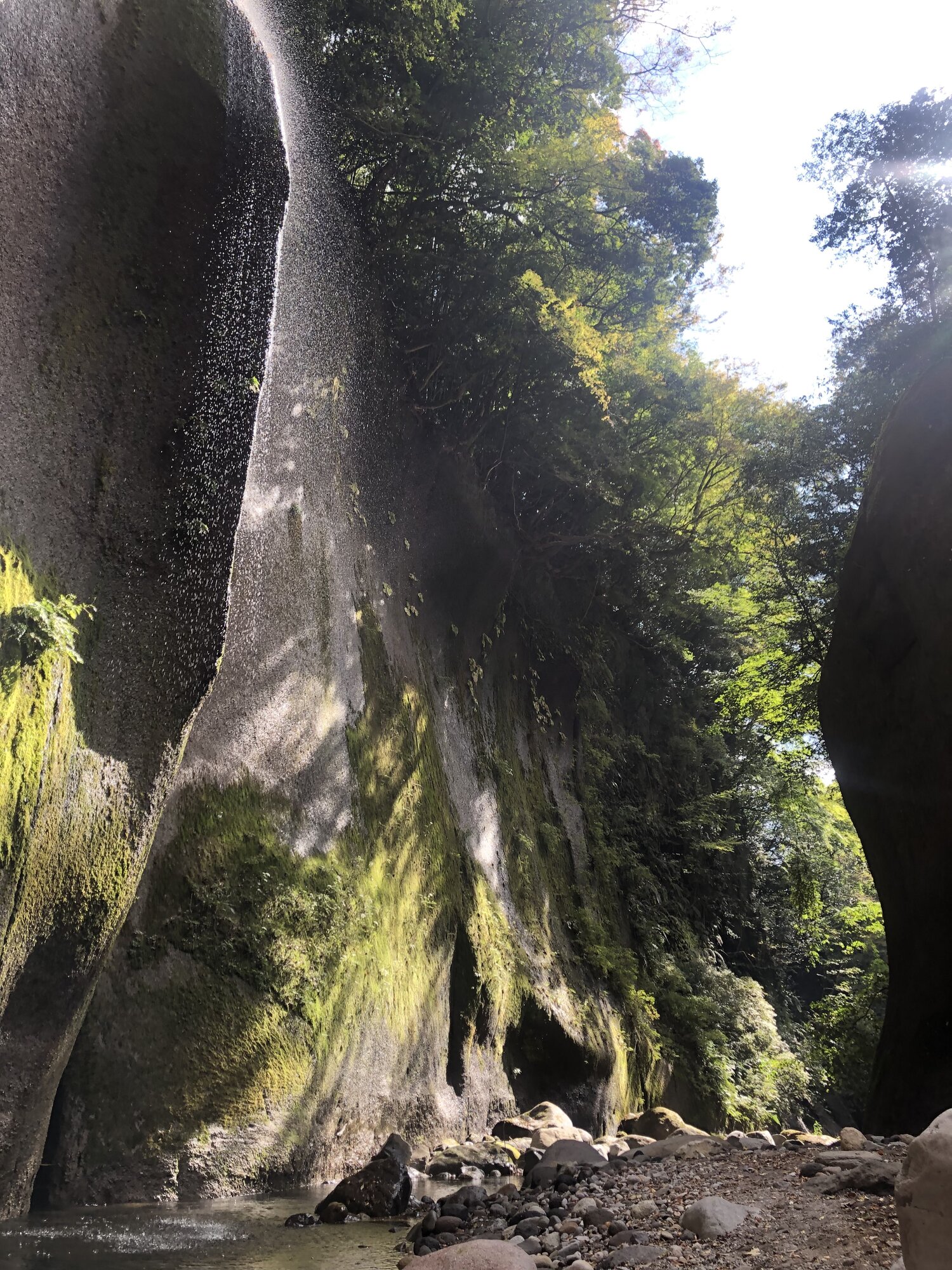
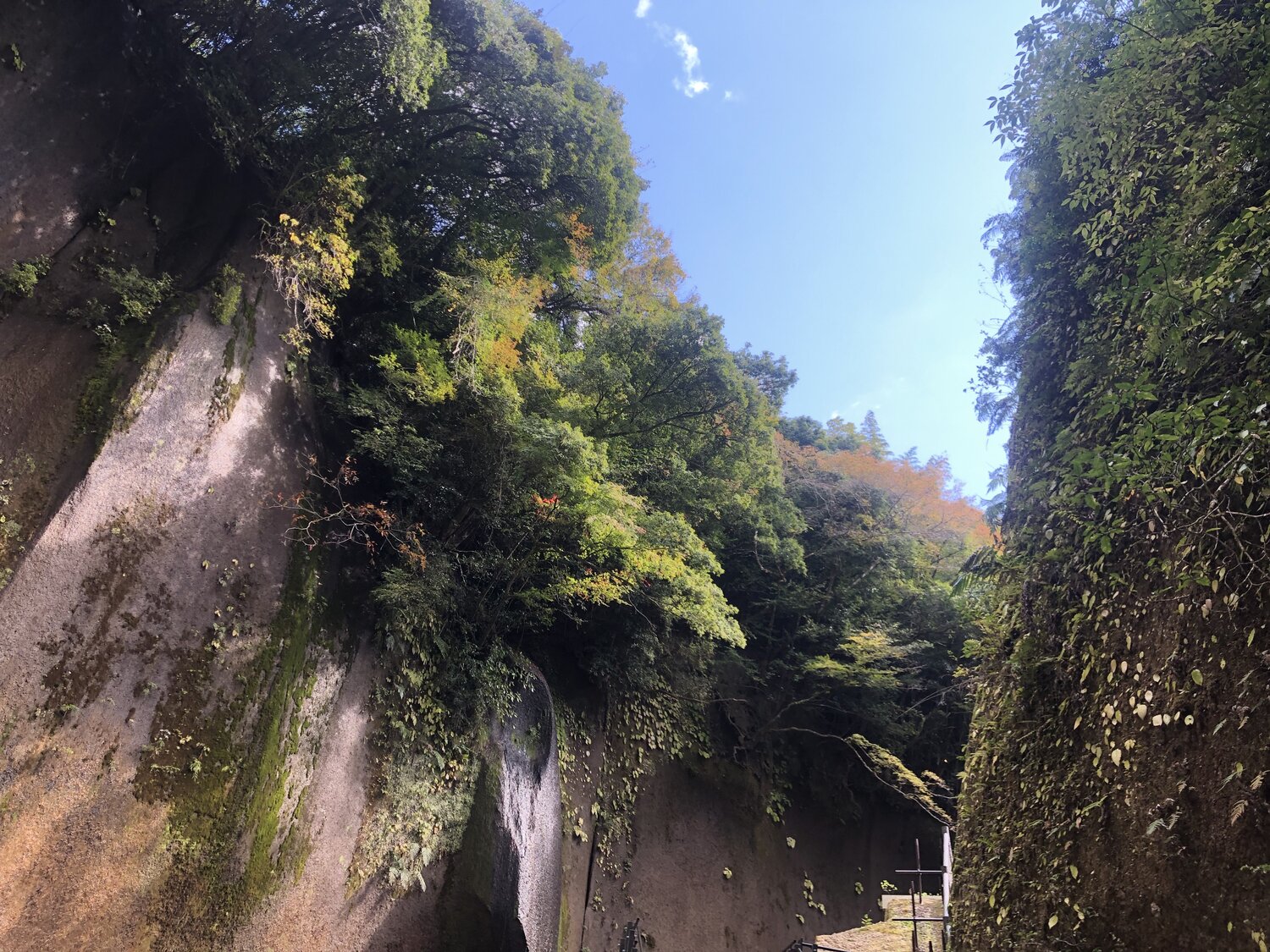
Most visitors driving between Yufuin and Beppu never learn this gorge exists. There’s no big roadside sign pointing to it, no tour bus parking lot — just a small entrance off a mountain road, a steep staircase, and then, suddenly, a slot canyon of moss-covered volcanic rock closing in overhead. This is Yufugawa Ravine (由布川渓谷), and it’s one of the few places in this corner of Oita where you can walk down into the landscape rather than just look at it from a viewpoint.
What Is Yufugawa Ravine
The Yufu River carved this gorge over roughly 600,000 years, cutting down through layers of welded tuff — compressed volcanic ash from ancient Kuju-area eruptions — to leave a narrow, V-shaped canyon. Depending on the stretch, the walls are reported to rise anywhere from about 15 to 60 meters, and the ravine is said to run for something like 12 kilometers in total, though only a small section near the entrance is realistically accessible on foot. The exposed rock face is streaked dark with mineral staining and, in wetter months, runs damp with seeping groundwater, which is why the whole gorge has picked up the nickname “the Tyrol of the Orient” (東洋のチロル) — a comparison that’s more about the dramatic scale of the rock than any real resemblance to the Alps.
Getting Down Into the Gorge
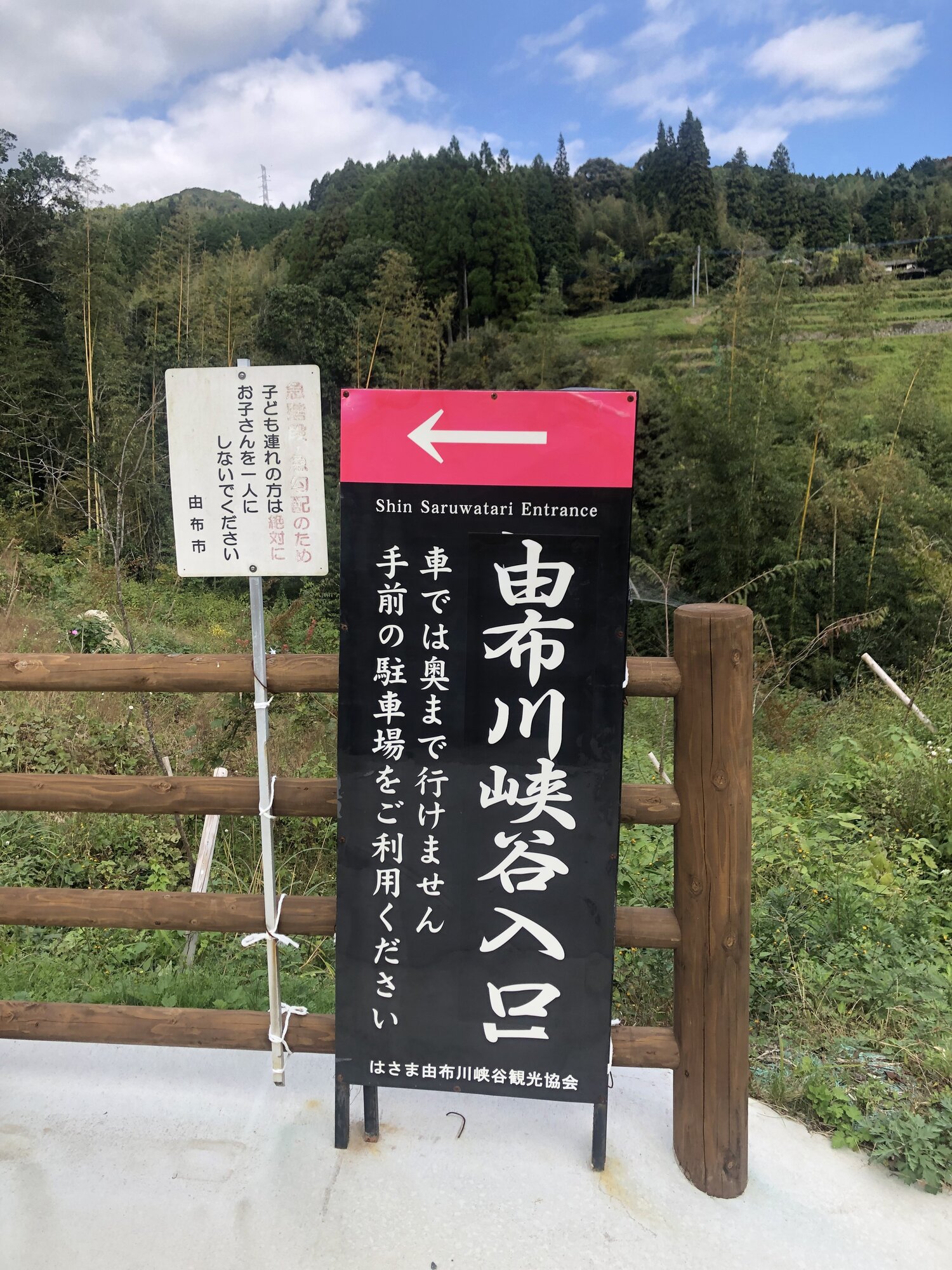
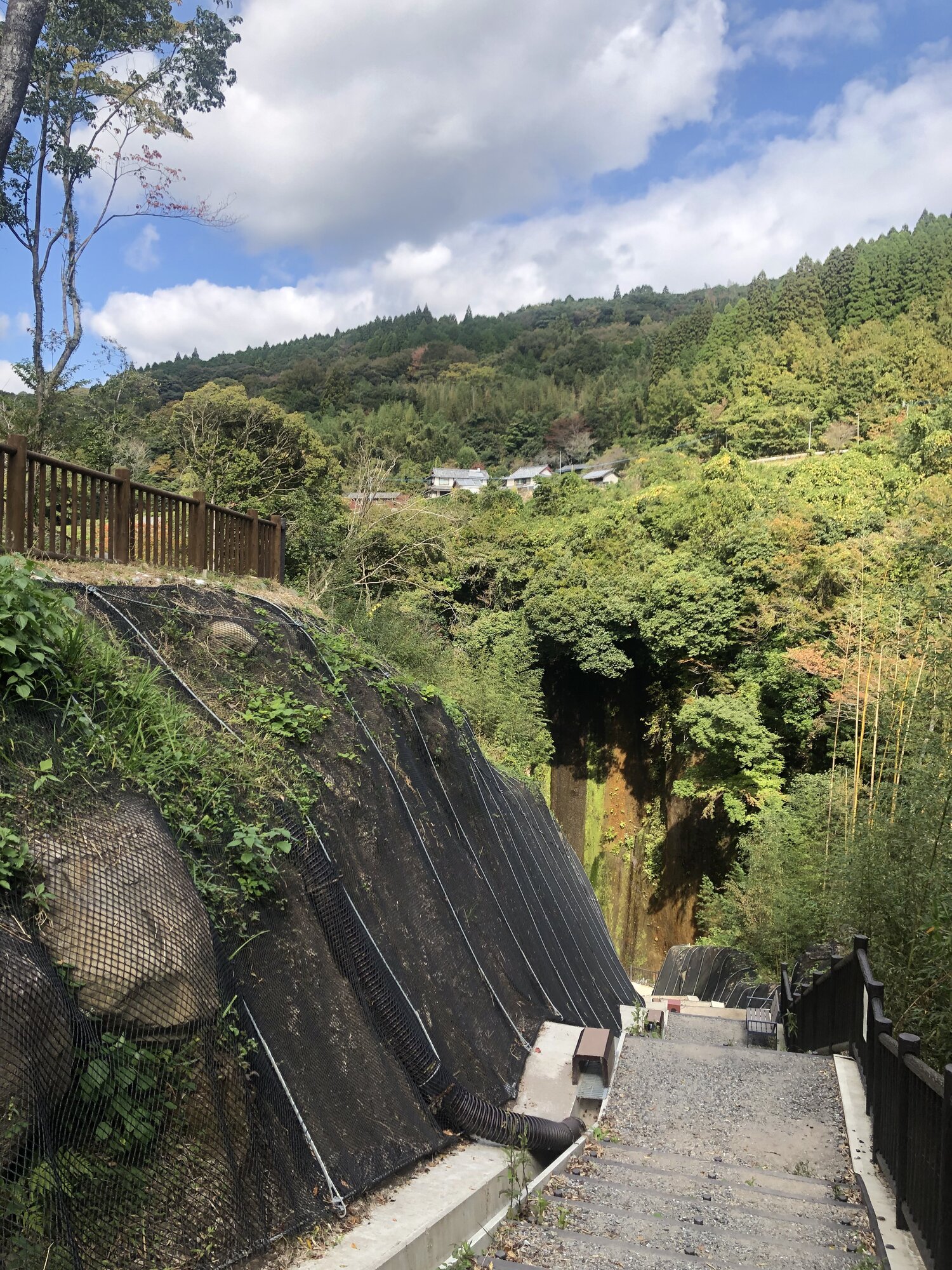
Yufugawa Ravine has historically had three entrance points, but access has changed a lot over the past decade. The Tsubaki entrance has been closed since the 2016 Kumamoto earthquake, and the Saruwatari entrance was damaged by a 2017 typhoon and rebuilt as “Shin Saruwatari” (新猿渡), reopening around 2021. Shin Saruwatari is the entrance most visitors use today, and it’s the one we visited. From the small parking area, a staircase of roughly 150–200 steps switchbacks straight down the cliff face into the canyon — there’s a modest fee at the reception hut (around ¥100 for adults, ¥50 for children, described as a “cleaning cooperation fee” rather than a formal entrance charge), and parking is free.
What You’ll Find at the Bottom
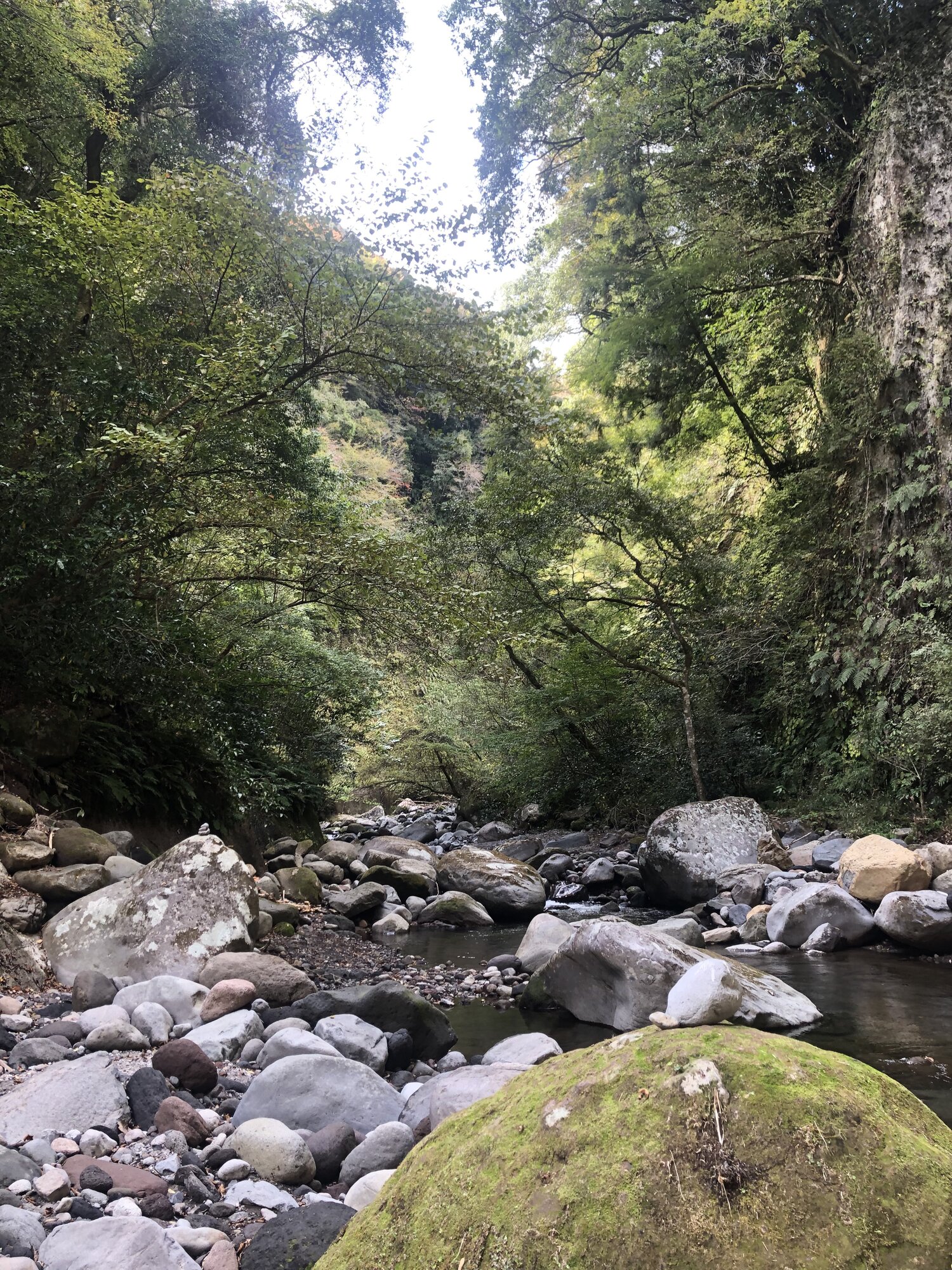
Once you’re down in the gorge, the scale of it becomes obvious — sheer walls on both sides, boulders scattered across the riverbed, and narrow gaps where the sky is reduced to a thin ribbon of light far overhead. Some sources point to two waterfalls further along the ravine, Koyanagi Falls (小柳の滝) and Sudare Falls (簾の滝), along with a distinctive chockstone wedged between the canyon walls, though we can’t independently confirm exactly how far into the gorge these are from the Shin Saruwatari entrance. What we can say from being there: the immediate area around the entrance staircase is dramatic enough on its own, with mossy overhangs, boulder-strewn shallows, and rock walls that genuinely feel like they’re closing in.
Not a Through-Hike
It’s worth setting expectations: this isn’t a trail that connects one end of the ravine to the other. Most visitors walk down the staircase, explore the accessible section of riverbed and rock near the entrance, and then climb back up the same way. Budget maybe 30–45 minutes round trip unless you plan to linger for photos. The footing on the rocks can be uneven and slick where water seeps down the walls, so proper shoes matter more here than at most of the spots on this site.
Visiting Yufugawa Ravine
Access: Shin Saruwatari entrance staircase (~150–200 steps)
Cost: ~¥100 adults / ¥50 children (cleaning cooperation fee)
Parking: Free, small lot at the entrance
Hours: Reception generally 10:00–16:00 — access can close after heavy rain or rockfall, so it’s worth checking current conditions before you go
Time needed: 30–45 minutes for the entrance area
Recognition: Designated a Scenic Site by Oita Prefecture
If you’re already in the area, Yufugawa Ravine pairs naturally with a same-day stop at Tsukahara Onsen, a dramatic volcano-slope hot spring a short drive away — that’s exactly how we visited both.
Getting There
Yufugawa Ravine sits in the hills southeast of Yufuin, roughly 30–40 minutes by car. There’s no train station nearby and only limited bus service, so a rental car is really the only practical way to reach it — the same is true for most of the spots in this part of Oita. If you’re new to driving in Japan, see our guide to the Yamanami Highway and why you need a car for IDP and rental car basics.
Leave a Reply